
Authors

Ralf Balayan
Practice Area Lead - Artificial Intelligence , Innflow AG

John Kuenzler
Transformation Companion , Innflow AG
Published on:
November 5, 2026
The Hidden Economics of AI: Choosing the Right Operating Model for Sovereignty and Cost Control
The Hidden Economics of AI: Choosing the Right Operating Model for Sovereignty and Cost Control
AI sovereignty is not just about where your data resides. It is also about who controls your costs, your access to intelligence, and your freedom to choose how AI creates value.
From AI experimentation to AI economics
For many organisations, the first phase of generative AI was surprisingly simple: choose a powerful model, connect through an API, experiment with a few use cases, and pay for what you consume.
That approach works remarkably well for experimentation. But what happens when AI moves from experimentation into the operating model of the enterprise? As organisations scale AI across knowledge work, customer service, software development, engineering, finance, HR and increasingly autonomous workflows, a new strategic question emerges:
What is the right AI operating model for our organisation?
The answer is unlikely to be “one model, one provider, one cloud”. Instead, organisations will need to decide deliberately which workloads should run where, on which models, under which governance model, and at what cost.
The economics of AI consumption
Most organisations currently focus their AI business cases on productivity gains. How much faster can employees create documents? How much coding effort can copilots eliminate? How many customer enquiries can an AI assistant handle? These are important questions.
But there is another side of the equation that receives considerably less attention: the economics of AI consumption. Large language models consume tokens. Every prompt, document, retrieved context, generated answer and interaction between AI agents consumes computational resources. For a single employee using an AI assistant occasionally, this may be economically insignificant.
At enterprise scale, however, the equation changes.
Imagine AI systems continuously analysing internal documents, retrieving corporate knowledge, processing customer interactions, generating software, evaluating contracts or allowing multiple AI agents to communicate with each other. AI consumption can then move from occasional human interaction to machine-speed consumption. The more deeply AI becomes embedded into business processes, the more important the underlying consumption model becomes.
The strategic question therefore changes from “How much does one AI query cost?” to “What happens to our cost structure when AI becomes part of thousands or millions of recurring business transactions?”
The token economy creates a new dependency
Today, many organisations access advanced AI capabilities through external providers whose services are priced directly or indirectly according to usage. This creates a highly attractive entry model: organisations can access extraordinary computing capabilities without building their own AI infrastructure.
But it also creates a new form of dependency. When AI becomes deeply embedded in business processes, organisations may increasingly depend on external providers not only for technology, but also for model availability and performance, pricing structures, contractual conditions, data-processing policies, geographic availability, integration architectures and future product decisions.
This does not mean that using large external AI platforms is strategically wrong. Quite the opposite: frontier models can provide capabilities that would be difficult or uneconomical for most organisations to reproduce themselves. The problem begins when every AI workload automatically follows the same architecture. A highly complex strategic analysis may require one of the world's most capable frontier models. A repetitive internal classification task probably does not. Yet both may end up being processed by the same model simply because that model became the corporate default.
This is convenient. It is not necessarily efficient.
Not every problem needs the biggest model
The next stage of enterprise AI will therefore require a more differentiated approach. Instead of asking which AI model is “best”, organisations should ask: Which model is appropriate for this workload?
Model selection then becomes an economic and architectural discipline. Some use cases may require maximum reasoning capability. Others may prioritise speed. Some workloads involve highly sensitive intellectual property. Others process public information. Some occur a few hundred times per year. Others may execute millions of times.
A useful AI operating model therefore needs to consider at least four dimensions:
- Capability — How much model intelligence does the task actually require?
- Sensitivity — What information is being processed, and what would be the impact of unwanted disclosure or access?
- Consumption — How frequently will the workload run and how much context does it require?
- Control — How much architectural, operational and economic independence does the organisation need?
AI architecture should follow workload characteristics, not provider preference.
Sovereignty is more than data residency
The discussion about AI sovereignty is often reduced to one question: Where is the data stored? That is important, particularly for organisations handling sensitive customer information, intellectual property or regulated data. But sovereignty goes further.
An organisation may store its data in Switzerland and still depend heavily on an external model provider for pricing, model availability, access conditions and technological development. True strategic sovereignty therefore has several dimensions.
• There is data sovereignty: who can access and process the information?
• There is technology sovereignty: how easily can models, platforms or infrastructure be changed?
• And increasingly, there is economic sovereignty: how much control does the organisation retain over the cost of operating AI at scale?
For C-suite leaders, these dimensions should be considered together.
Making sovereignty economically viable
For Swiss organisations, a private AI environment can be more than a safeguard for sensitive information. It can also be a way to rethink the economics of AI consumption. Consider workloads that process large volumes of internal documents, retrieve proprietary knowledge or support recurring business processes. If these workloads can be served effectively by appropriately selected models hosted in a controlled Swiss environment, organisations may be able to replace variable per-token charges with a more predictable infrastructure or package-based cost model.
This is the principle behind approaches such as Innflow's Secure LLM: customer-specific language models operated in a controlled Swiss environment, with the option to connect enterprise applications such as ERP, CRM, data lakes, DMS/ECM and proprietary applications. Rather than relying on a single model, suitable open-source models can be selected according to the respective use case and deployed within the private environment.
The economic argument, however, is not that private AI is always cheaper. Private infrastructure has costs. Models need to be operated, monitored and updated. Capacity needs to be available. Utilisation matters. Integration and governance require effort. Nor does Swiss hosting alone answer every question of AI sovereignty.
The relevant question is whether a particular workload benefits sufficiently from greater control over data processing, model deployment and cost predictability to justify the investment. For some workloads, the answer will clearly be yes. For others, an external frontier model may remain the better economic and technological choice.
The emerging answer: a hybrid AI operating model
This points toward what may become the dominant enterprise architecture for AI: the hybrid AI operating model. Instead of choosing between public and private AI, organisations deliberately combine them.
High-complexity tasks can access frontier models when their capabilities justify the cost. Sensitive knowledge-intensive workloads can operate within controlled environments. High-volume repetitive tasks can use smaller, specialised models where sufficient. Internal knowledge can remain within private environments while selected tasks access external models under clearly defined policies.
In such an architecture, the question is no longer “Which AI platform should we choose?” It becomes: “How do we dynamically allocate workloads to the right model, infrastructure and economic model?”
That is a much more powerful strategic question.
From model strategy to AI portfolio management
This also changes the role of enterprise architecture and AI governance. AI governance should not only prevent undesirable behaviour. It should help the organisation make intelligent allocation decisions.
A mature AI operating model should therefore create transparency across the AI portfolio: Which workloads are running? Which models are being used? Which data is being processed? How much AI capacity is being consumed? What does that consumption cost? And could the same business outcome be achieved with a different model or deployment architecture?
This turns AI infrastructure from a technical issue into a portfolio management challenge. Just as organisations manage suppliers, cloud environments, applications and investment portfolios, they will increasingly need to manage a portfolio of AI capabilities.
Avoiding the next vendor lock-in
There is another reason why this matters. Enterprise technology history is full of platforms that began as convenient tools and gradually became critical infrastructure. Once deeply embedded into processes, data architectures and employee workflows, changing them becomes expensive.
AI could accelerate this dynamic. If hundreds of business processes depend on one model provider, switching is no longer simply an IT procurement decision. It becomes an organisational transformation.
A hybrid architecture can therefore provide something that may become increasingly valuable: optionality.
The ability to use different models. The ability to move workloads. The ability to keep sensitive knowledge under organisational control. And the ability to decide where the capabilities of external frontier models justify their cost.
The objective should not be independence from global AI providers. It should be freedom of choice.
The C-suite question
For executives, the AI infrastructure debate can easily appear highly technical: tokens, GPUs, models, APIs, vector databases, private clouds. But beneath these technologies lies a very familiar management question:
Which capabilities do we want to control ourselves, and where do we deliberately depend on external partners?
Companies have answered this question for decades in manufacturing, logistics, IT, finance and supply chains. AI is no different. What is different is the speed at which dependencies can emerge. The AI architecture decisions organisations make today may determine not only where their data is processed, but also their future cost structures, technological flexibility and ability to adopt the next generation of AI models.
That makes the AI operating model a strategic management decision, and not merely an IT architecture decision.
From AI strategy to AI operating model
The first wave of generative AI was about access. The next wave will be about architecture.
Organisations that succeed will not necessarily be those using the largest models everywhere. They will be those capable of orchestrating the right intelligence for the right task at the right cost and under the right level of control.
For many Swiss organisations, a controlled private AI environment can become an important component of that architecture, particularly for sensitive, proprietary or high-volume workloads. External frontier models will remain equally important where their superior capabilities create sufficient value.
The competitive advantage lies in connecting both worlds. Because the ultimate goal of AI sovereignty should not be isolation.
It should be strategic freedom.
Join the discussion at the Swiss AI Summit
At the upcoming Swiss AI Summit 2026, Rouslan Ralf Balayan and John Künzler from Innflow will explore these questions together with participants in the workshop:
“The Right AI Operating Model for You: Sovereignty Meets Optimised Token Consumption”
Rather than debating whether private or public AI is inherently better, the workshop will examine the more relevant question: Which combination of models, infrastructure and sourcing approaches creates the right balance between capability, sovereignty, flexibility and economics for your organisation?
Because there may be no single right AI operating model. But there should be a deliberate one.
Share via:
Read more
-
November 6, 2026
The Platform Comes to You
How We’re Bringing the Full Power of Salesforce to Any Interface
-

October 26, 2026
Why Switzerland Is well positioned for the Private AI Era
Interview with Yves Zischek, MD Switzerland & Austria @ Digital Realty
-
October 15, 2026
AI: Threat or Opportunity? What a Translator Learned from Kodak’s Downfall
How Innosuisse R&D helped turn AI disruption into LegalTech growth.
-
October 13, 2026
The Myth of Fast: Why Switzerland's AI Advantage Depends on What It Refuses to Rush
Clouds on Mars’ perspective on AI adoption and what's at stake for Switzerland
-
October 9, 2026
AI in financial services: From experimentation to trust
Turning AI prototypes into trusted, scalable financial solutions.
-
October 7, 2026
Intelligent Resilience: Rethinking Financial Governance in the Era of Digital Fraud and AI
Leverage AI and real-time analytics to meet FINMA’s dynamic fraud guidance.
-
September 7, 2026
2026 EDITION: Autonomy & Sovereignty
The Swiss AI Summit announces the theme of the 2026 Edition.
-
July 7, 2026
Portugal's State Reform in the Age of AI
What Governments Can Learn from a New Model of Public Administration
-
June 30, 2026
From Code Completion to Autonomous Coding Agents
Our Key Takeaways from our Vibe Coding Session hosted by OST
-
May 14, 2026
The geopolitics of data sovereignty
The political, economic, and strategic battle over digital trust
-

March 25, 2026
Swiss AI Magazine 2026 Launch
A recap of the Swiss AI Magazine 2026 launch event in Zurich at Headsquarter.
-

March 11, 2026
How to create real business value from AI
Insights from the First Swiss AI Summit Community Event of 2026
-

February 13, 2026
Agentic AI Orchestration
Swiss AI Summit 2025 Keynote with Georg M. V. Olowson from IBM.
-
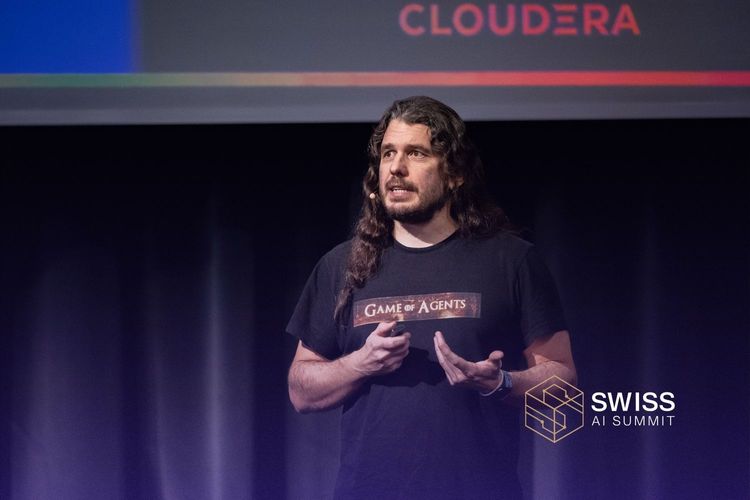
February 12, 2026
Driving Scalable AI Adoption
Swiss AI Summit 2025 Keynote with Sergio Gago, CTO @ Cloudera
-
February 11, 2026
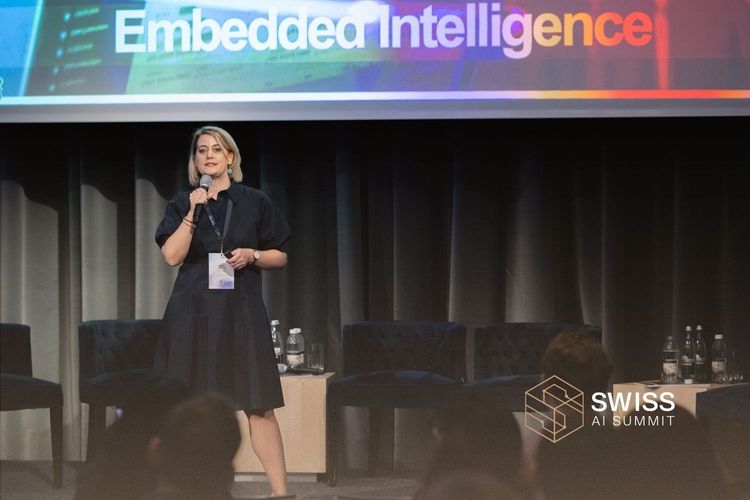
Embedded Intelligence
Swiss AI Summit 2025 Keynote with Nadine Ebmeyer, CEO @ BANQR
-

February 10, 2026
Enterprise AI Beyond the Hype
Swiss AI Summit 2025 Keynote with Dr. Dorian Selz, Founder & CEO @ Squirro AG
-

February 9, 2026
From AI Ambition to Scalable Impact
Swiss AI Summit 2025 Keynote with Wanja Bont, Partner @ PVL Partners
-
February 6, 2026
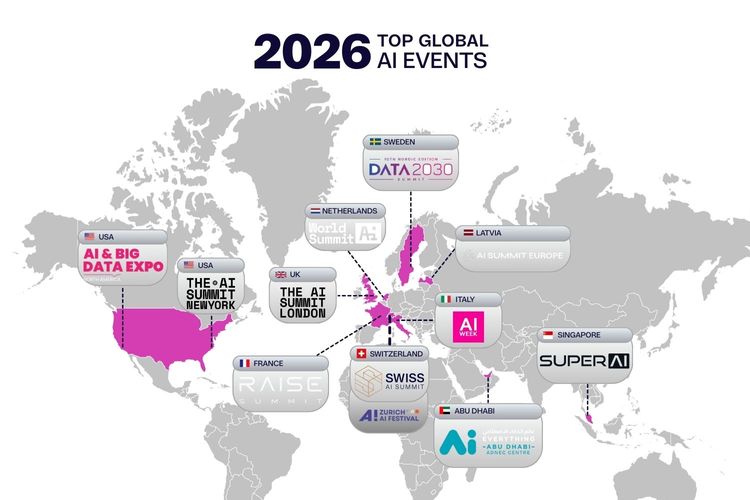
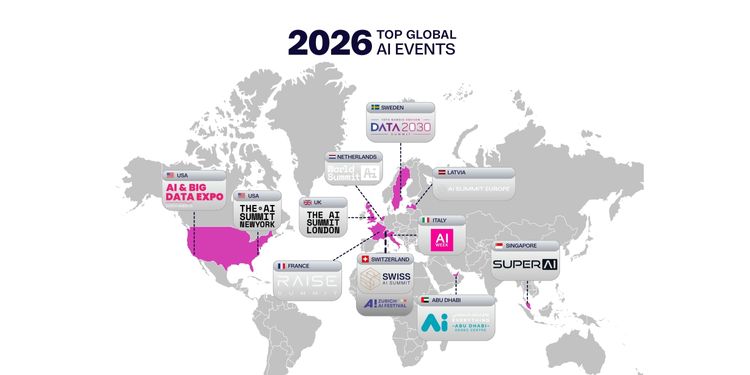
Swiss AI Summit listed as a top Global AI Event
Read more about the Article and our Listing by DigitalMara.
-

February 5, 2026
EU-INC. One Legal Entity, One AI Rulebook:
What the EU’s Single Market Vision Means for Tech Companies and AI Innovation
-
November 2, 2025
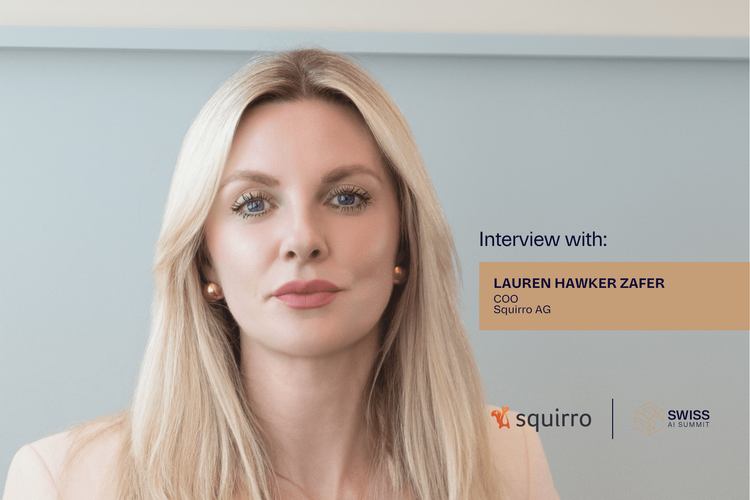
Interview with: Lauren Hawker Zafer
How Squirro’s Lauren Hawker Zafer views Zurich’s growing AI ecosystem
-
October 8, 2025
PRESS RELEASE: SwissCognitive and Swiss AI Summit join forces
Strengthening business-driven AI adoption and dialogue in Switzerland and beyond
-

October 1, 2025
Article: General-Purpose AI Code of Practice
From Voluntary Code to Strategic Standard: leveraging the GPAI Code of Practice.
-
September 29, 2025
News: The Swiss AI Summit Ecosystem
Switzerland's holistic Platform for AI Innovation
-

September 10, 2025
Article: Escaping the 85% Failure Trap:
Boost Your AI with Quantum-Enhanced Time Series Forecasting
-

September 10, 2025
Article: AI as the Brain of Tomorrow’s Financial System
Insights from Pathway 2035 for Financial Innovation – Your Navigator
-

September 8, 2025
Article: Shaping the Future
AI for Good Global Summit 2025 as the UN’s Premier Forum for AI Innovation
-
September 7, 2025
Article: Unlocking Generative AI in Finance
Solving Complex Data Challenges for Central Banks and Government Authorities
-

September 3, 2025
Article: THE FIVE TRUTHS OF AI - 2025 PERSPECTIVE
Let's explore the evolved "5 Truths of AI" that have emerged in 2025.
-

September 2, 2025
Article: Masumi - The PayPal for AI Agents
“We want to build the PayPal for AI agents.”



























Share via: