


Published on:
October 1, 2025
Reading time:
4 minutes
Article: General-Purpose AI Code of Practice
From Voluntary Code to Strategic Standard: leveraging the GPAI Code of Practice like an ISO Framework to unlock strategic ROI and competitive AI Governance.
Part 1
About
On 10 July 2025 the European Commission has received the final version of the General-Purpose AI Code of Practice “GPAI CoP”. The GPAI CoP is the work result of nearly 1000 independent experts including EU Member States representatives.
The code is a voluntary tool designed to offer guidance for general-purpose AI models and general-purpose AI models with systemic risks. Although the GPAI CoP itself is voluntary, once formally endorsed by Member States and the European Commission it serves as a “presumption of conformity” with the obligations under EU AI Act for GPAI providers.
Structure
The CoP is divided into three chapters: Transparency and Copyright Chapters, both addressing all providers of GPAI models, and thirdly the Safety & Security Chapter relevant only for GPAI providers with systemic risk.
In other words, the transparency and copyright chapters apply to all GPAI providers irrespective if the product falls under under the systemic risk definition of Art. 55 AI Act or not.
We will dive into each chapter separately in the upcoming issues.
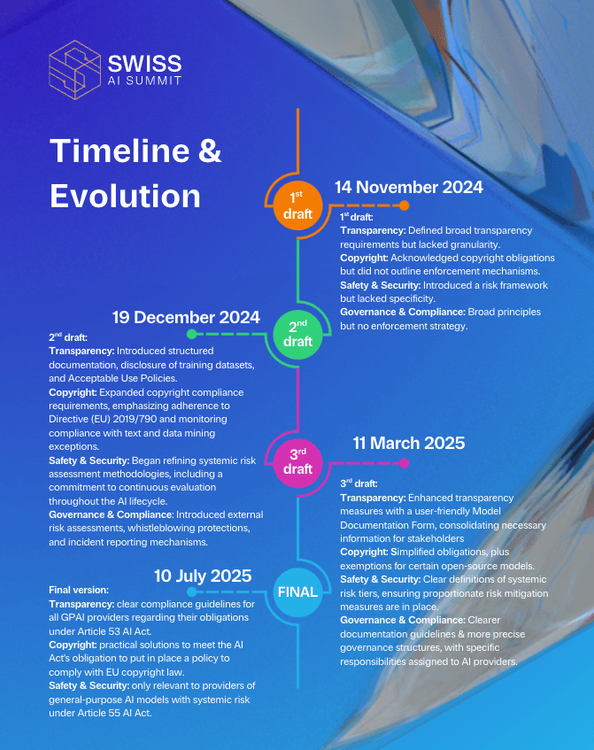
Role
The role of the GPAI CoP is simple and clear. It is designed to reduce the administrative burden and give more legal certainty for GPAI system providers and thus play a key role in implementing the EU AI Act.
Next steps
By 2nd August 2025 the AI Office and AI Board will assess the CoP and may approve it via an adequacy decision. After the CoP is endorsed, AI model providers who voluntarily sign it can show they comply with the AI Act by adhering the GPAI CoP.
The date is no coincidence. 2nd August marks the date when the GPAI provisions of the EU AI Act (Regulation (EU) 2024/1689) enter into force. This means that the placement of GPAI models after 2nd of August must adhere to the applicable rules from the AI Act.
The GPAI models already placed on the market before 2nd August 2025, benefit from a transition period of 2 years until 2nd August 2027 to comply with the new regulations.
Entry into force
Key date is 2nd August 2025, same date as when the GPAI-specific obligations under the EU AI Act officially come into force.
Part 2
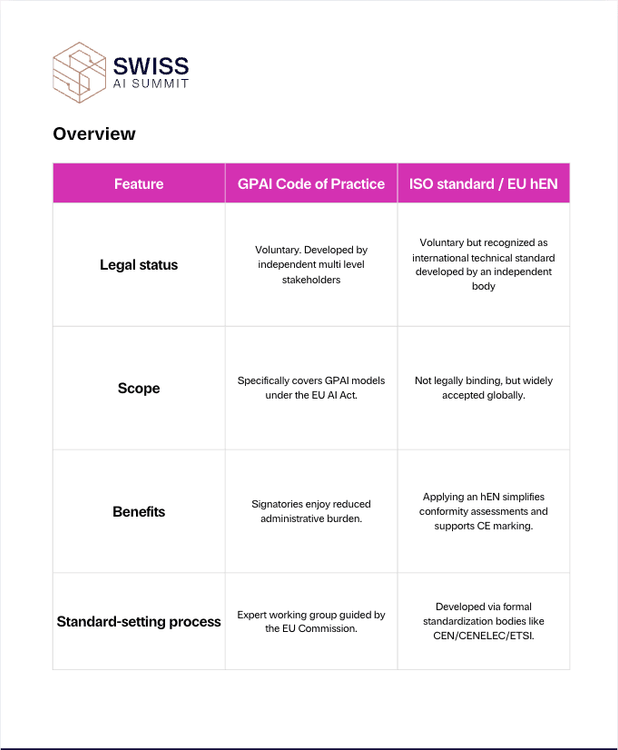
Does the GPAI Code of Practice behave like an ISO standard?
Both the GPAI CoP and the ISO standard are voluntary norms (soft law) that are designed to offer guidance & legal certainty for companies. Over the past years applying for an ISO standard it has became not just good practice, but in many cases, an indirect requirement. Many companies pursue ISO certification to gain competitive market advantage, and in some industries, it has became an audit requirement to demonstrate, risk management, and regulatory compliance.
Given the clear strategic value the GPAI CoP offers, one might ask: What is the parallel between these two approaches? Are they the same? Do they carry the same legal weight, or do they differ in important respects?
Similarities
The following similarities can be identified:
Presumption of compliance: Once formally endorsed by the Member States and the Commission, providers who sign and follow the CoP can treat it as a recognized way to demonstrate compliance with the AI Act. That is similar to what happens with EU harmonised standards (hENs): adherence creates a presumption of conformity with legal requirements.
2. Both the GPAI CoP and the ISO standard are voluntary norms (soft law) that are designed to offer guidance & legal certainty for companies. Companies may choose to adopt it or choose to demonstrate compliance through other means (other in-house compliance solutions).
3. Developed by 13 independent experts, with input from over 1,000 stakeholders, including model providers, small and medium-sized enterprises, academics, AI safety experts, rightsholders, and civil society organisations. It is expected to be endorsed via an adequacy decision issued by the AI Office and AI Board.
While both the ISO standard and the GPAI CoP promote responsible AI, they differ in legal effect, development process, and strategic purpose. ISO offers a global, certifiable governance standard. The GPAI CoP, in contrast, is tailored to the EU regulatory context, designed to reduce the administrative burden and increase legal certainty for GPAI providers under the EU AI Act, potentially serving as a blueprint to presumed compliance once endorsed.
Key Takeaway
The GPAI Code of Practice does notestablish a formal ISO certification regime, however once endorsed by EU authorities, it effectively operates the same way as a harmonised standard or ISO‑style benchmark under the AI Act. Therefore, even though it behaves like an ISO or hEN in practice, providing a safe‑harbour compliance mechanism, it still remains a code of practice (a guide) rather than a formal industry standard or certification scheme.
Although signing is voluntary, it offers legal and administrative advantages, making it a preferred route for GPAI providers. Moreover, it holds the potential to deliver market and strategic advantages comparable to those of ISO certification, positioning early adopters as leaders in trustworthy, responsible AI.
Share via:
Read more
-
September 7, 2026
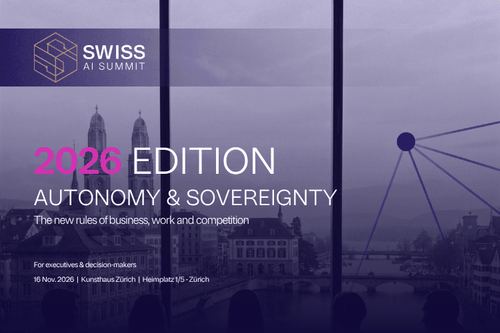
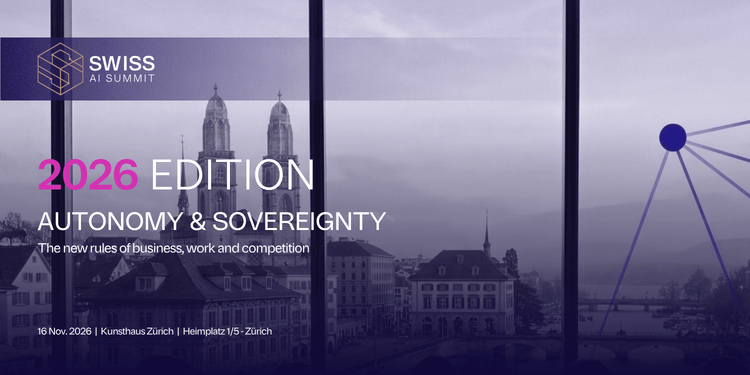
2026 EDITION: Autonomy & Sovereignty
The Swiss AI Summit announces the theme of the 2026 Edition.
-
July 7, 2026
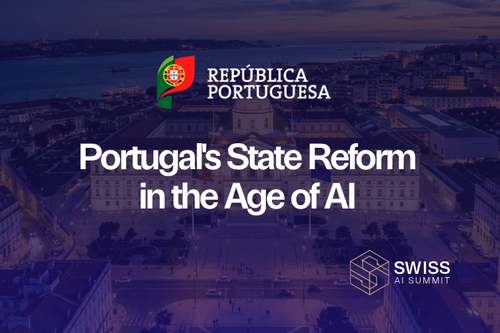
Portugal's State Reform in the Age of AI
What Governments Can Learn from a New Model of Public Administration
-
June 30, 2026
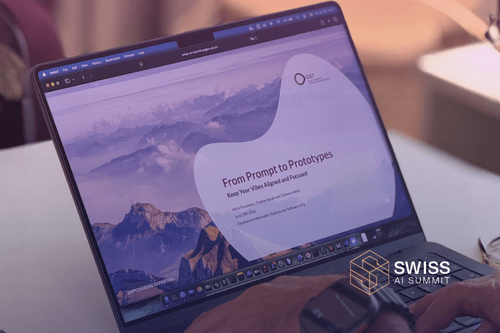
From Code Completion to Autonomous Coding Agents
Our Key Takeaways from our Vibe Coding Session hosted by OST
-
May 14, 2026
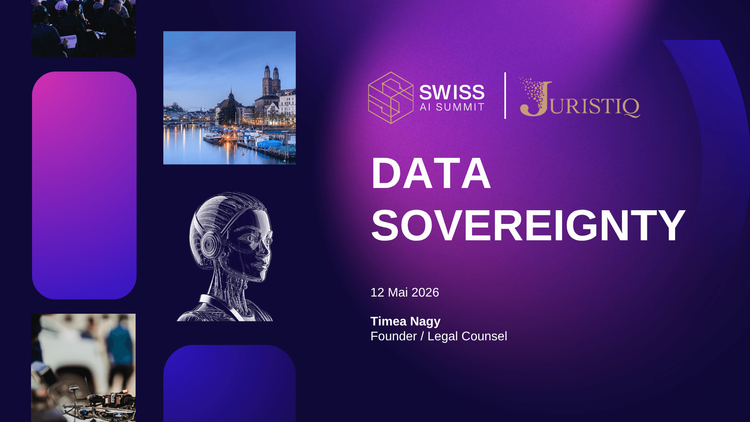
The geopolitics of data sovereignty
The political, economic, and strategic battle over digital trust
-
March 25, 2026
Swiss AI Magazine 2026 Launch
A recap of the Swiss AI Magazine 2026 launch event in Zurich at Headsquarter.
-

March 11, 2026
How to create real business value from AI
Insights from the First Swiss AI Summit Community Event of 2026
-

February 13, 2026
Agentic AI Orchestration
Swiss AI Summit 2025 Keynote with Georg M. V. Olowson from IBM.
-
February 12, 2026
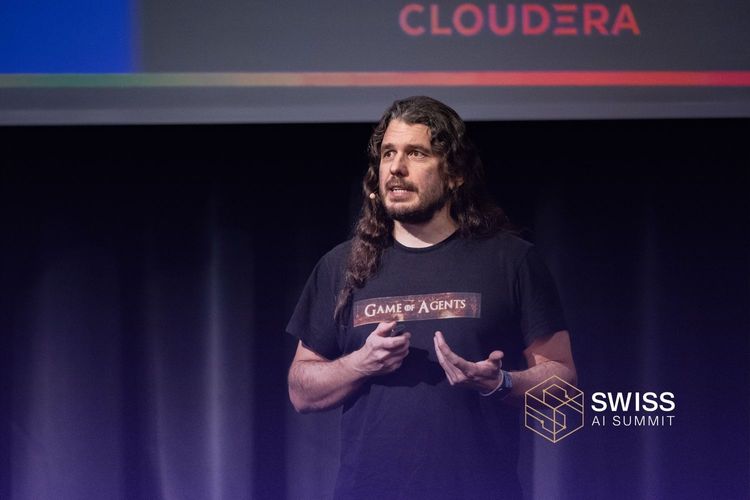
Driving Scalable AI Adoption
Swiss AI Summit 2025 Keynote with Sergio Gago, CTO @ Cloudera
-
February 11, 2026
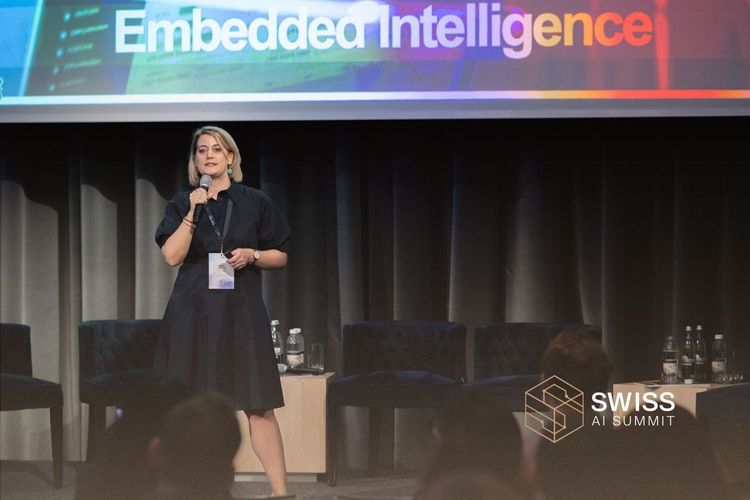
Embedded Intelligence
Swiss AI Summit 2025 Keynote with Nadine Ebmeyer, CEO @ BANQR
-
February 10, 2026
Enterprise AI Beyond the Hype
Swiss AI Summit 2025 Keynote with Dr. Dorian Selz, Founder & CEO @ Squirro AG
-

February 9, 2026
From AI Ambition to Scalable Impact
Swiss AI Summit 2025 Keynote with Wanja Bont, Partner @ PVL Partners
-
February 6, 2026
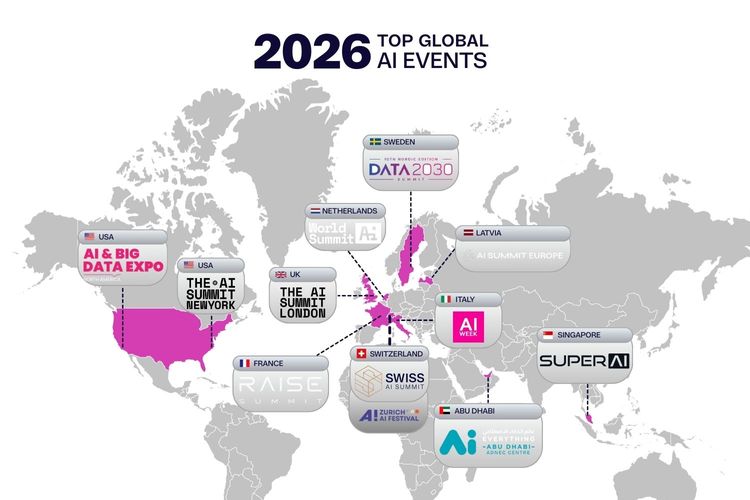
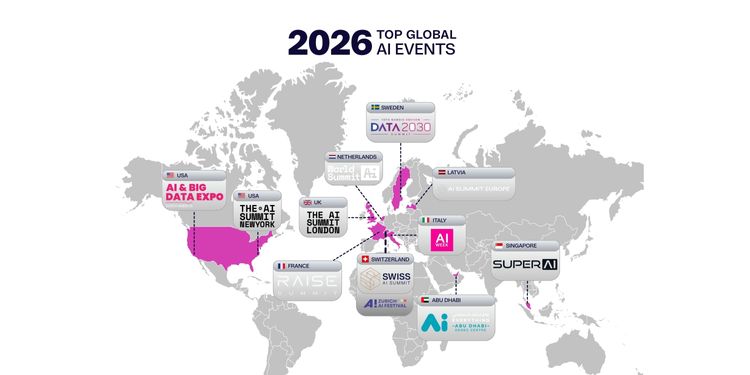
Swiss AI Summit listed as a top Global AI Event
Read more about the Article and our Listing by DigitalMara.
-
February 5, 2026
EU-INC. One Legal Entity, One AI Rulebook:
What the EU’s Single Market Vision Means for Tech Companies and AI Innovation
-
November 2, 2025
Interview with: Lauren Hawker Zafer
How Squirro’s Lauren Hawker Zafer views Zurich’s growing AI ecosystem
-
October 8, 2025
PRESS RELEASE: SwissCognitive and Swiss AI Summit join forces
Strengthening business-driven AI adoption and dialogue in Switzerland and beyond
-
September 29, 2025
News: The Swiss AI Summit Ecosystem
Switzerland's holistic Platform for AI Innovation
-

September 10, 2025
Article: Escaping the 85% Failure Trap:
Boost Your AI with Quantum-Enhanced Time Series Forecasting
-

September 10, 2025
Article: AI as the Brain of Tomorrow’s Financial System
Insights from Pathway 2035 for Financial Innovation – Your Navigator
-
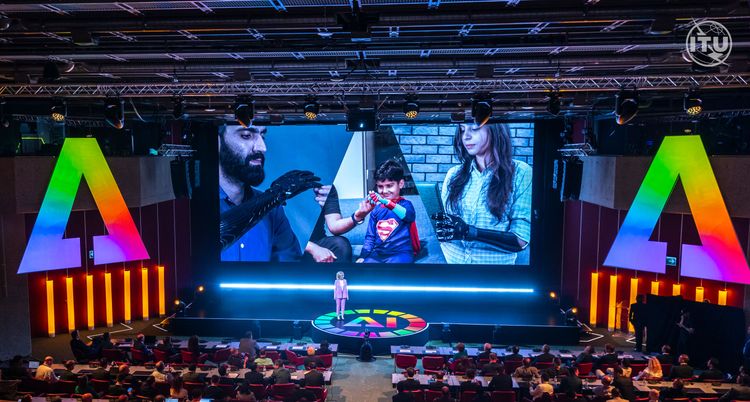
September 8, 2025
Article: Shaping the Future
AI for Good Global Summit 2025 as the UN’s Premier Forum for AI Innovation
-
September 7, 2025
Article: Unlocking Generative AI in Finance
Solving Complex Data Challenges for Central Banks and Government Authorities
-
September 3, 2025
Article: THE FIVE TRUTHS OF AI - 2025 PERSPECTIVE
Let's explore the evolved "5 Truths of AI" that have emerged in 2025.
-

September 2, 2025
Article: Masumi - The PayPal for AI Agents
“We want to build the PayPal for AI agents.”













Share via: