

Published on:
February 5, 2026
Reading time:
10 minutes
EU-INC. One Legal Entity, One AI Rulebook:
EU-INC. One Legal Entity, One AI Rulebook: What the EU’s Single Market Vision Means for Tech Companies and AI Innovation
As the European Union accelerates its ambition to become a global leader in trustworthy artificial intelligence, one concept is gaining renewed attention: one legal entity recognized across European countries.
For years, the European Union claimed to be a Single Market. In reality, for tech and AI companies, it often felt like 27 fragmented markets loosely stitched together by Brussels.
That is now changing.
With the push toward one legal entity recognized across EU countries, combined with the EU AI Act, Europe is finally starting to operate as one coherent market of 450+ mill consumer block, and that shift has massive consequences for technology, AI innovation, and geopolitics.
So what does this mean in practice? And does it actually make Europe more attractive for AI and technology companies?
What Does “One Legal Entity Recognized Across Europe” Mean?
Let us break it down from a geopolitical angle:
To understand why this matters, it helps to look at Europe through a geopolitical lens.
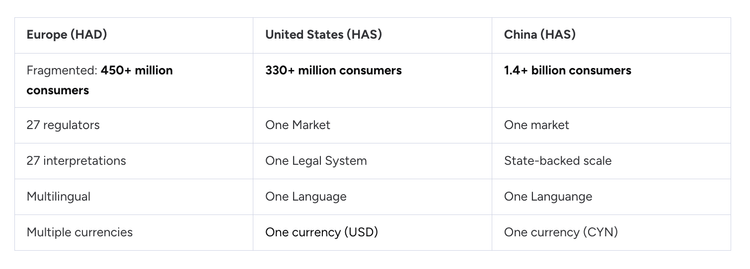
For decades, Europe competed globally with a structural handicap. While the United States and China operated as unified markets, Europe remained fragmented.
Europe had a market of over 450 million consumers, but it was split across 27 regulators, 27 legal interpretations, multiple languages, and multiple currencies. The United States operated as a single market of roughly 330 million consumers, with one legal system, one regulator model, one language, and one currency. China went even further, combining a massive internal market of more than 1.4 billion people with state-backed scale and centralized coordination.
This fragmented European model was never going to win.
The new approach promoted by the European Commission aims to correct this structural weakness. In simple terms, it allows companies to operate across all EU Member States under a single legal and regulatory framework, instead of navigating 27 parallel systems.
This does not mean one unified company law overnight, and it does not mean national authorities disappear. What it does mean is far more practical: one main establishment, one lead regulator, one compliance strategy, and effective access to one single market of more than 450 million people.
This principle sits at the core of the EU Single Market, especially in digital services, data, and artificial intelligence.
Europe WILL HAVE:
- One main establishment
- One lead regulator
- One compliance strategy
- One market. One market of 450+ mill consumers.
Why This Matters for Tech and AI Companies?
Scaling a tech product across Europe has long been expensive and inefficient. Companies were required to set up multiple legal entities, comply with different national regulations, and repeat the same compliance processes in each country. This fragmentation increased costs, slowed innovation, and prevented Europe from functioning as a true single market for technology.
The move toward a single legal entity recognized across the EU changes this. Tech companies can establish once and operate across the entire European Union under harmonized rules. This reduces regulatory complexity, lowers compliance costs, and provides legal certainty. For AI companies, where regulatory obligations are already high, this simplification is especially important.
This approach also enables faster EU-wide scaling of AI products. Instead of launching market by market, companies can deploy AI systems across the EU using one compliance strategy and working with one lead regulator. Europe begins to resemble other large technology markets, such as the United States, while maintaining its focus on trustworthy, safe, and ethical artificial intelligence.
The AI Act: Regulation as a Competitive Tool
The EU AI Act is often framed as a constraint on innovation. In reality, its most strategic function is market unification.
Because it is a regulation, not a directive, it applies directly across all EU Member States. It prevents national AI laws from diverging and creates one common rulebook for AI development and deployment. Combined with the single legal entity approach, the AI Act transforms Europe from a patchwork of rules into a continental-scale AI market.
This is not accidental. It is Europe’s attempt to turn regulation into infrastructure — and infrastructure into competitiveness.
Final Takeaway
The EU’s push toward one legal entity recognized across Europe is more than regulatory reform, it is a foundational shift in how AI and technology companies scale, comply, and innovate.
Aligned with the EU AI Act and the European Single Market, this model:
- Reduces fragmentation
- Increases legal certainty
- Supports responsible AI innovation
For companies building the future of AI and for ecosystems like Switzerland’s the question is no longer whether to engage with this framework, but how to lead within it.
Share via:
Read more
-
September 7, 2026
2026 EDITION: Autonomy & Sovereignty
The Swiss AI Summit announces the theme of the 2026 Edition.
-
July 7, 2026
Portugal's State Reform in the Age of AI
What Governments Can Learn from a New Model of Public Administration
-
June 30, 2026
From Code Completion to Autonomous Coding Agents
Our Key Takeaways from our Vibe Coding Session hosted by OST
-
May 14, 2026
The geopolitics of data sovereignty
The political, economic, and strategic battle over digital trust
-

March 25, 2026
Swiss AI Magazine 2026 Launch
A recap of the Swiss AI Magazine 2026 launch event in Zurich at Headsquarter.
-

March 11, 2026
How to create real business value from AI
Insights from the First Swiss AI Summit Community Event of 2026
-

February 13, 2026
Agentic AI Orchestration
Swiss AI Summit 2025 Keynote with Georg M. V. Olowson from IBM.
-

February 12, 2026
Driving Scalable AI Adoption
Swiss AI Summit 2025 Keynote with Sergio Gago, CTO @ Cloudera
-
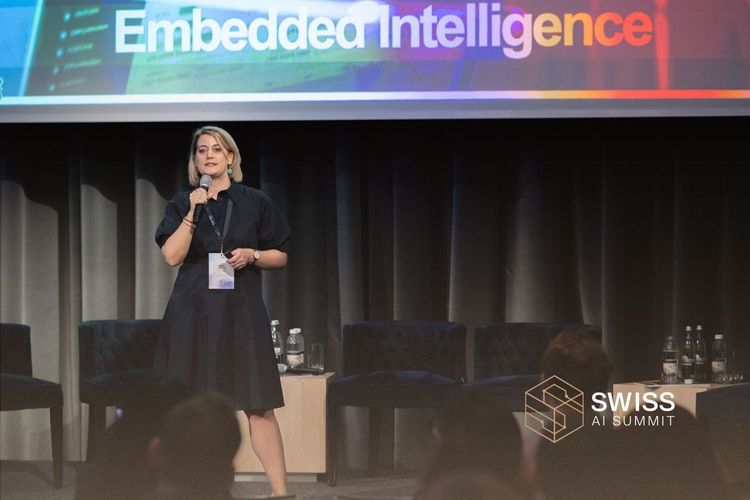
February 11, 2026
Embedded Intelligence
Swiss AI Summit 2025 Keynote with Nadine Ebmeyer, CEO @ BANQR
-

February 10, 2026
Enterprise AI Beyond the Hype
Swiss AI Summit 2025 Keynote with Dr. Dorian Selz, Founder & CEO @ Squirro AG
-
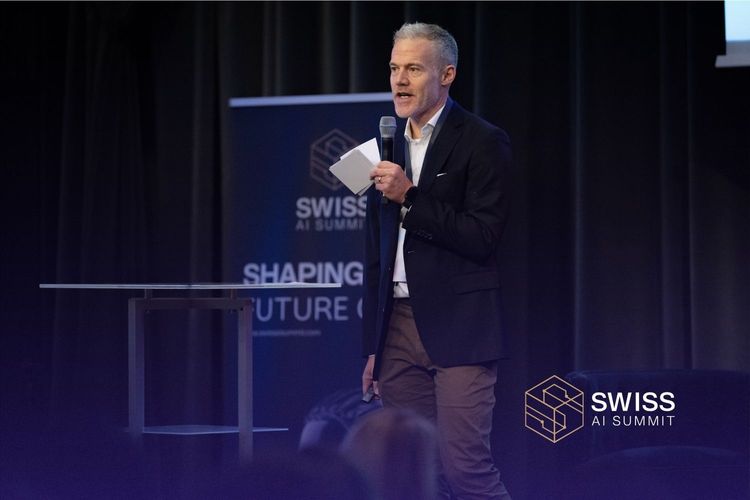
February 9, 2026
From AI Ambition to Scalable Impact
Swiss AI Summit 2025 Keynote with Wanja Bont, Partner @ PVL Partners
-
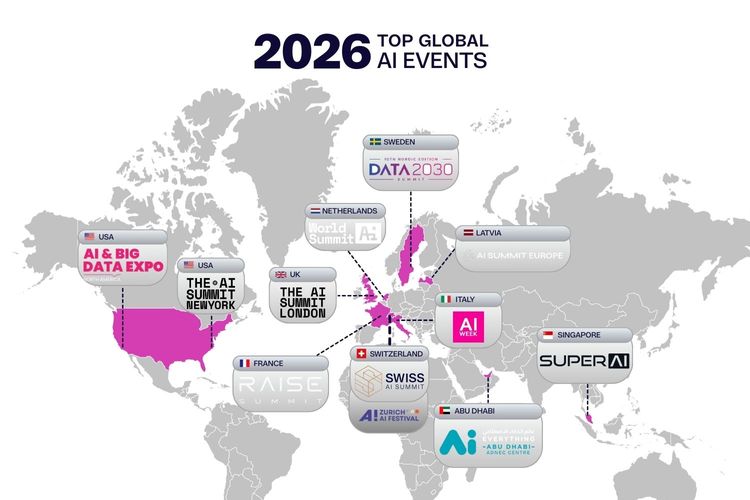
February 6, 2026
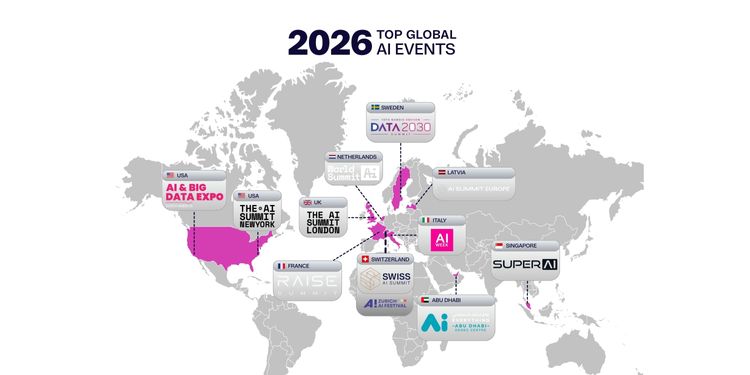
Swiss AI Summit listed as a top Global AI Event
Read more about the Article and our Listing by DigitalMara.
-
November 2, 2025
Interview with: Lauren Hawker Zafer
How Squirro’s Lauren Hawker Zafer views Zurich’s growing AI ecosystem
-

October 8, 2025
PRESS RELEASE: SwissCognitive and Swiss AI Summit join forces
Strengthening business-driven AI adoption and dialogue in Switzerland and beyond
-

October 1, 2025
Article: General-Purpose AI Code of Practice
From Voluntary Code to Strategic Standard: leveraging the GPAI Code of Practice.
-
September 29, 2025
News: The Swiss AI Summit Ecosystem
Switzerland's holistic Platform for AI Innovation
-

September 10, 2025
Article: Escaping the 85% Failure Trap:
Boost Your AI with Quantum-Enhanced Time Series Forecasting
-

September 10, 2025
Article: AI as the Brain of Tomorrow’s Financial System
Insights from Pathway 2035 for Financial Innovation – Your Navigator
-
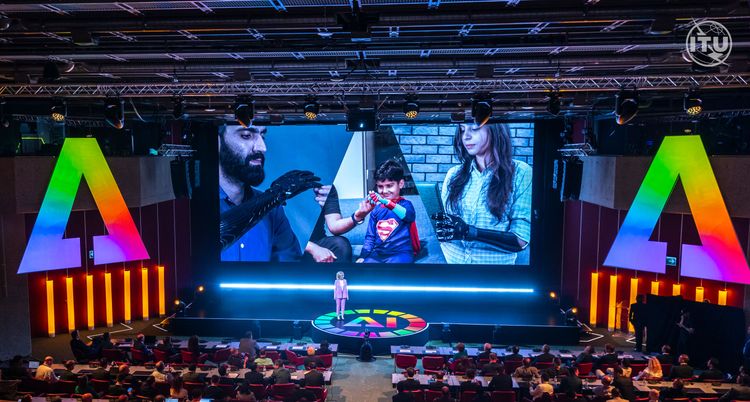
September 8, 2025
Article: Shaping the Future
AI for Good Global Summit 2025 as the UN’s Premier Forum for AI Innovation
-

September 7, 2025
Article: Unlocking Generative AI in Finance
Solving Complex Data Challenges for Central Banks and Government Authorities
-
September 3, 2025
Article: THE FIVE TRUTHS OF AI - 2025 PERSPECTIVE
Let's explore the evolved "5 Truths of AI" that have emerged in 2025.
-
September 2, 2025
Article: Masumi - The PayPal for AI Agents
“We want to build the PayPal for AI agents.”











Share via: