


Published on:
September 10, 2025
Reading time:
7 minutes
Article: Escaping the 85% Failure Trap:
Artificial Intelligence (AI) has sparked widespread enthusiasm, with business publications high-lighting its potential to revolutionize industries. Yet despite this excitement, an IDC study shows that up to 85% of AI projects fail. One major reason is that many companies choose the wrong projects or lack a clear business strategy. While tools like chatbots and “talk with your documents” AI can be impressive, they do not always offer the highest value in every situation. In many cases, enterprises would benefit more by focusing on less flashy, higher-impact opportunities.
Why Time Series Data Matters
A powerful yet often overlooked resource is time series data. This is simply data collected at regular intervals – such as temperature readings from factory sensors, daily sales for a retail chain, or website performance metrics tracked minute by minute. By analyzing how something changes over time, businesses can uncover patterns to forecast future events or make more in-formed decisions. For instance, manufacturers can use time series data to predict when a ma-chine might fail, helping them schedule maintenance more efficiently. Similarly, retailers can forecast product demand to manage inventory and staffing. When used properly, time series data becomes a valuable predictor of events, ensuring smoother operations and fewer surprises.
The Challenge of Robustness
Even when organizations harness time series data, they often struggle with maintaining model robustness. Robustness refers to how well an AI system can handle changes in the environment or in the data itself – an issue commonly called data drift. Imagine a factory AI trained on data from machines that operate at a certain speed and temperature. If the factory updates its equip-ment or reconfigures production lines, the original model may perform poorly because it no longer reflects the new conditions. Data drift can also happen when markets shift dramatically, or consumer behaviors change. Unless your AI is designed to adapt to these changes, performance will likely deteriorate.
Our Next-Generation AI Pipeline
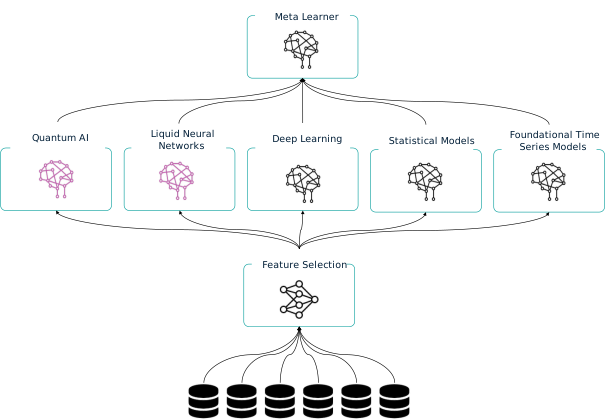
To address these challenges, our team at QuantumBasel created a state-of-the-art AI pipeline that combines traditional AI methods with quantum computing, an emerging technology that has captured global attention. Unlike classical computers, which store information in bits (either 0 or 1), quantum computers use quantum bits (qubits) that can hold multiple states simultaneously. This allows them to handle certain types of complex computations far more efficiently. Alt-hough quantum computing is still evolving, it shows promise in optimization, cryptography, and advanced machine learning. By integrating quantum algorithms into our pipeline, we can explore large solution spaces at speeds that would be impractical with standard methods, potentially giving companies a significant edge in tackling complex forecasting or optimization problems.
Meta Learning Explained
Another key component of our pipeline is meta learning. Traditional AI often relies on a single model. Meta learning, however, uses a “coach” approach, where multiple models – each with its own strengths – are evaluated and combined. Instead of betting everything on one method, you have a system that adapts and picks the best approach over time. Think of it as assembling a team of specialists rather than relying on one expert. This boosts resilience because if conditions change and your main model falters, you can quickly shift to another that handles the new scenario better.
An Industry Success Story
This approach can apply to almost any sector because time series data is everywhere. In a recent collaboration, we helped an energy company improve its demand forecasting by up to 24% compared to traditional AI solutions. Energy providers need to predict fluctuations in usage ac-curately, as overestimates or underestimates can lead to wasted resources or insufficient supply. By using a meta learning strategy and weaving quantum algorithms into the mix, we boosted the reliability and accuracy of the forecasts, delivering tangible business value.
Moving Forward
The benefits of AI are real, but the path to success can be tricky. Many projects fail because they are either misaligned with business objectives or cannot adapt to changing data. Focusing on time series data, investing in robust AI strategies, and exploring cutting-edge innovations like quantum computing can unlock substantial rewards. Meta learning offers a flexible way to hedge against rapid shifts in data while maximizing performance.
If you want to learn more about how these advanced techniques could elevate your own organi-zation’s forecasting or operational efficiency, we invite you to get in touch. Whether you are in manufacturing, retail, energy, or another industry, time series data combined with state-of-the-art AI can help you anticipate risks, optimize processes, and stay ahead of the competition. Let us show you how an adaptive, quantum-enhanced AI pipeline and meta learning can yield real, measurable improvements – just as it did for our industry partner.
Reach out today, and let’s tailor this powerful approach to your specific needs.
Share via:
Read more
-
September 7, 2026
2026 EDITION: Autonomy & Sovereignty
The Swiss AI Summit announces the theme of the 2026 Edition.
-
July 7, 2026
Portugal's State Reform in the Age of AI
What Governments Can Learn from a New Model of Public Administration
-
June 30, 2026
From Code Completion to Autonomous Coding Agents
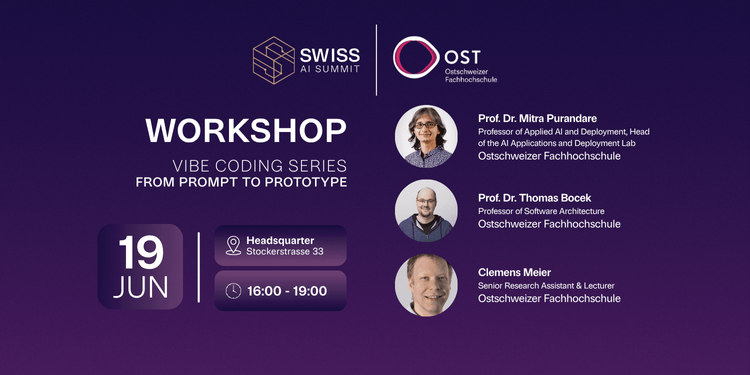
Our Key Takeaways from our Vibe Coding Session hosted by OST
-
May 14, 2026
The geopolitics of data sovereignty
The political, economic, and strategic battle over digital trust
-
March 25, 2026
Swiss AI Magazine 2026 Launch
A recap of the Swiss AI Magazine 2026 launch event in Zurich at Headsquarter.
-

March 11, 2026
How to create real business value from AI
Insights from the First Swiss AI Summit Community Event of 2026
-

February 13, 2026
Agentic AI Orchestration
Swiss AI Summit 2025 Keynote with Georg M. V. Olowson from IBM.
-

February 12, 2026
Driving Scalable AI Adoption
Swiss AI Summit 2025 Keynote with Sergio Gago, CTO @ Cloudera
-
February 11, 2026
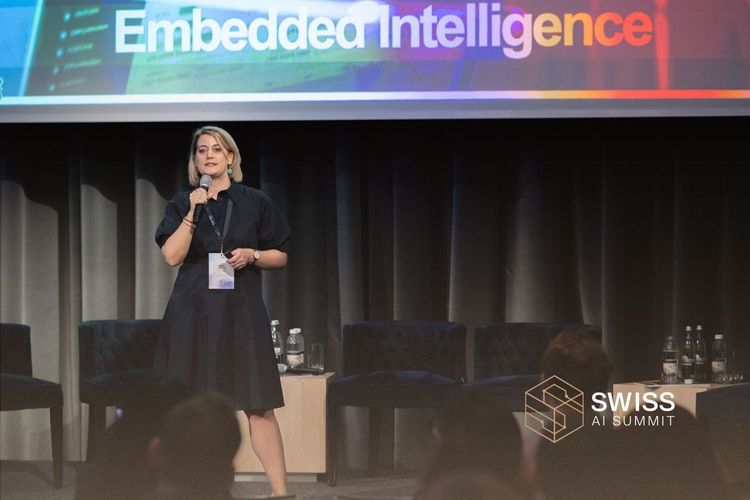
Embedded Intelligence
Swiss AI Summit 2025 Keynote with Nadine Ebmeyer, CEO @ BANQR
-

February 10, 2026
Enterprise AI Beyond the Hype
Swiss AI Summit 2025 Keynote with Dr. Dorian Selz, Founder & CEO @ Squirro AG
-

February 9, 2026
From AI Ambition to Scalable Impact
Swiss AI Summit 2025 Keynote with Wanja Bont, Partner @ PVL Partners
-
February 6, 2026
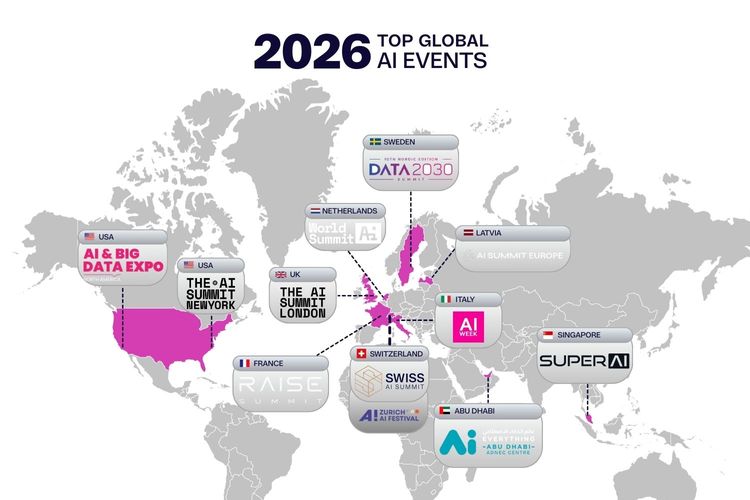
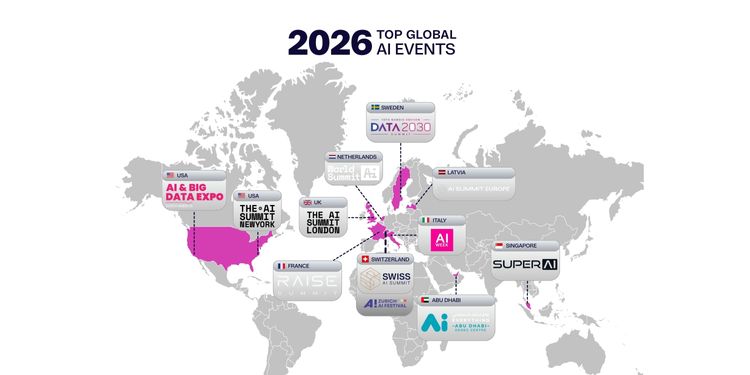
Swiss AI Summit listed as a top Global AI Event
Read more about the Article and our Listing by DigitalMara.
-

February 5, 2026
EU-INC. One Legal Entity, One AI Rulebook:
What the EU’s Single Market Vision Means for Tech Companies and AI Innovation
-

November 2, 2025
Interview with: Lauren Hawker Zafer
How Squirro’s Lauren Hawker Zafer views Zurich’s growing AI ecosystem
-
October 8, 2025
PRESS RELEASE: SwissCognitive and Swiss AI Summit join forces
Strengthening business-driven AI adoption and dialogue in Switzerland and beyond
-

October 1, 2025
Article: General-Purpose AI Code of Practice
From Voluntary Code to Strategic Standard: leveraging the GPAI Code of Practice.
-
September 29, 2025
News: The Swiss AI Summit Ecosystem
Switzerland's holistic Platform for AI Innovation
-

September 10, 2025
Article: AI as the Brain of Tomorrow’s Financial System
Insights from Pathway 2035 for Financial Innovation – Your Navigator
-

September 8, 2025
Article: Shaping the Future
AI for Good Global Summit 2025 as the UN’s Premier Forum for AI Innovation
-
September 7, 2025
Article: Unlocking Generative AI in Finance
Solving Complex Data Challenges for Central Banks and Government Authorities
-

September 3, 2025
Article: THE FIVE TRUTHS OF AI - 2025 PERSPECTIVE
Let's explore the evolved "5 Truths of AI" that have emerged in 2025.
-

September 2, 2025
Article: Masumi - The PayPal for AI Agents
“We want to build the PayPal for AI agents.”



























Share via: