
Author

Christian Seider
Managing Director Switzerland , NTT DATA
Published on:
November 27, 2025
Reading time:
10 minutes
Interview with: Christian Seider
Artificial intelligence has long entered the mainstream, and almost every company is exploring its potential. But how far along are Swiss companies in actually using AI?
The level of maturity varies greatly. Lots of companies are still experimenting, and while we see impressive pilot projects, only few organizations have managed to operationalize and scale AI successfully. The main hurdles are less about technology itself than governance, data management, and business alignment. The key question isn’t what AI can do, but how it creates measurable business value. Only when companies align their organization, data strategy, and infrastructure, can AI truly become a competitive advantage for them.
What do you see as the critical success factors for implementing AI?
Successful companies don’t adopt AI for Its own sake. They treat it as a strategic tool. That means they focus AI initiatives on business impact from the start. It’s essential to begin with concrete use cases that drive productivity, efficiency, or customer experience. A clean data foundation is equally critical: even the most sophisticated model remains error-prone without high-quality, trustworthy data. AI only unlocks its full value when it is integrated into existing processes and can scale. Finally, the entire organization must be ready to work with the technology: employees need to understand how to interpret and use AI results responsibly.
For businesses, this means it is essential to actively involve employees in the transformation driven by AI. While the technology sparks curiosity, it can also trigger concerns or fear. Investing in training helps dispel uncertainties and build competence. This fosters trust and promotes a proactive mindset, as employees begin to see AI as a tool for relief and growth, rather than a threat.
Business value emerges when AI systems don't operate in isolation, but rather manage and optimize end-to-end business processes.
Where do you see the greatest potential for automation and end-to-end transformation through AI - including Agentic AI?
The biggest opportunity lies in combining automation with intelligence. In the past, processes were often automated selectively, for example through RPA or workflow systems. Today, the goal is to break down those silos and orchestrate entire business processes in a data-driven, end-to-end manner. AI plays a dual role here: it identifies patterns and optimization potential within processes and increasingly, it can make autonomous decisions or trigger actions. This marks the step toward Agentic AI: systems that execute tasks independently to achieve defined objectives, guided by rules, data, and context.
In banking, for instance, Agentic AI can largely automate credit assessments - not just preparing decisions, but managing the entire process from data review to risk evaluation and loan approval. In manufacturing, Agentic AI can autonomously adjust production plants to optimize utilization, energy consumption, and quality.
Ultimately, real business value arises when AI systems are not operated in isolation. Integration is key - enabling intelligent business processes in which AI learns, controls, and contributes directly to value creation.
Which AI applications are currently growing most dynamically in Switzerland?
In banking, the focus is on automating compliance and risk processes. AI helps analyse vast amounts of data and implement regulatory requirements efficiently. In the insurance sector, it supports the optimization of claims handling and risk assessment, always with the aim of ensuring fair, transparent, and traceable processes. The pharmaceutical industry uses AI across the entire value chain, from molecular research and clinical trials to supply chain management and quality control. In manufacturing and the consumer goods industry, the emphasis is typically on efficiency: predictive maintenance, quality assurance, and intelligent production planning. The public sector, too, is beginning to use trustworthy AI in administrative processes, for example in document processing or decision support.
All these projects show that AI is not only a driver of innovation but also a powerful tool for productivity in established processes.
Disclaimer
The views and opinions expressed in this interview are those of the interviewee and do not necessarily reflect the official position of the Swiss AI Summit, its organizers, or its partners. The content is provided for informational purposes only and should not be construed as professional advice. While every effort is made to ensure the accuracy of the information presented, the Swiss AI Summit, its tea, and partners make no representations or warranties of any kind, express or implied, about the completeness, reliability, or suitability of the content. Any reliance placed on such information is therefore strictly at the reader’s own risk. Mentions of companies, products, services, or initiatives do not constitute an endorsement by the Swiss AI Summit or its partners. Readers should independently verify any claims and consult appropriate professionals before making decisions based on the content. We are not responsible for any loss, damage, or consequences arising from the use of information contained in this publication or on our digital platforms
To build secure and responsible AI systems, it is essential that security teams, developers and data scientists work together from the outset to integrate cybersecurity.
How do you see AI evolving in the coming years?
AI will become deeply embedded in day-to-day operations, as an integral part of enterprise architecture rather than a standalone innovation. At the same time, the issue of digital sovereignty will grow in importance as companies seek to retain control over their data and models while reducing dependencies on foreign providers and dominant platforms. AI governance will become standard practice, meaning systems will be designed to meet regulatory requirements, protect against misuse and manipulation, and deliver explainable, auditable, and fair outcomes.
Switzerland is exceptionally well-positioned here: its high standards of quality, political stability, and strong data protection culture provide an excellent foundation to take a leading role in trustworthy AI.
Can you elaborate on protection against misuse and manipulation?
As AI becomes pervasive across industries, it is increasingly targeted by cybercriminals. They might, for example, attempt to extract sensitive information through elaborated prompts or manipulate training and input data to distort outcomes. Such attacks can have far-reaching consequences, especially for safety-critical systems.
Companies therefore need to protect their models and data carefully and define guardrails - security mechanisms that prevent AI from responding to malicious prompts, producing harmful or confidential content, or making decisions beyond its intended scope.
Protecting AI is not the sole responsibility of the security team. Security, development, and data science teams must work closely together to integrate cybersecurity into AI systems from the outset. Only then can trust in AI and its decisions be established, especially in highly regulated sectors like banking, insurance, and healthcare, where sensitive customer data is at stake. Safeguarding that data is not just a regulatory obligation but a social responsibility, as data protection is a fundamental civil right.
You already mentioned governance and regulation. What role does “Responsible AI” play in this context?
Responsible AI brings together ethical, legal, and economic responsibility. It builds transparency and trust, both internally and externally. In Switzerland, this is particularly relevant: banks must comply with FINMA guidelines ensuring that automated decisions are transparent, explainable, and non-discriminatory. Insurers are obliged to use fair, unbiased models, for example in risk assessment or premium calculation. Pharmaceutical companies are bound by GxP standards. We help organizations build governance frameworks so that AI systems are not only technically sound but also auditable and compliant with regulatory requirements. This creates trust - and ultimately, acceptance.
Switzerland offers ideal conditions for secure and responsible AI. Its competitive edge lies not in size, but in attitude: quality over quantity, trust over hype.
What role do data centers and infrastructures play for AI?
Data centers are springing up around the globe, even in regions that weren’t previously considered data center hotspots. Infrastructure is the backbone of every modern AI application, and computing power is the key factor. That’s why our data center in Rümlang is designed for high-performance computing and GPU clusters. We provide companies with a secure, reliable environment for their AI systems and applications right here in Switzerland.
The energy demand of such systems is considerable, which is why we are focused heavily on energy efficiency, load management, and heat recovery. We continuously measure and optimize to ensure that computing power is provided as effectively and efficiently as possible. This is not a theoretical sustainability discussion but a practical necessity rooted in operations.
In this way, we make sustainability an integral part of our infrastructure planning - ensuring it’s not an end in itself, but a key driver of efficiency for our facilities.
How do you view Switzerland’s role in AI development, particularly regarding economic value and international competitiveness?
Switzerland combines scientific excellence, economic stability, and a strong commitment to data protection and quality standards. These are ideal conditions to turn responsible AI into a true competitive advantage. Institutions such as ETH and EPFL, together with an innovation-driven SME landscape, create an environment where research and practical application work hand in hand.
Despite challenges such as high trade tariffs or global competition, this drives efforts to build sovereign AI infrastructures and forge European partnerships. The vibrant start-up ecosystem also plays a vital role in promoting applied innovation and sustainable growth.
These factors allow Switzerland to strengthen its position as a Trusted AI Hub - a location where AI is not only powerful but also ethical, secure, and sustainable. Because ultimately, the country’s true competitive edge lies not in size, but in mindset: quality over quantity, trust over hype.
About NTT DATA Group
NTT DATA is in the DACH region part of the NTT DATA Group. With annual global revenues of $30+ billion, it is a leading provider of business and technology services, serving 75 % of the Fortune Global 100. Across the group, the company is commited to accelerating client success and positively impacting society through responsible innovation. NTT DATA is one of the world’s leading AI and digital infrastructure providers, with unmatched capabilities in enterprise-scale AI, cloud, security, connectivity, data centers and application services. Through consultng and industry-specific solutions, NTT DATA helps organizations and society move confidently and sustainably into the digital future. As a Global Top Employer, the group has experts in more than 70 countries. In addition, it offers clients access to a robust ecosystem of innovation centers as well as established and start-up partners. NTT DATA is part of NTT Group, which invests over $3 billion each year in R&D.
Share via:
Read more
-
September 7, 2026
2026 EDITION: Autonomy & Sovereignty
The Swiss AI Summit announces the theme of the 2026 Edition.
-
July 7, 2026
Portugal's State Reform in the Age of AI
What Governments Can Learn from a New Model of Public Administration
-
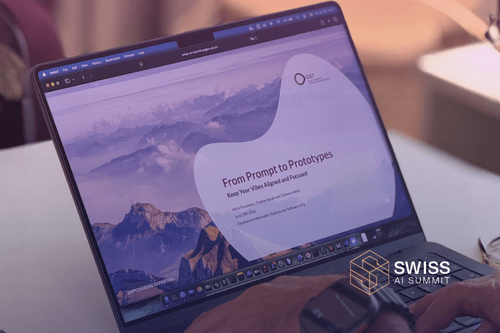
June 30, 2026
From Code Completion to Autonomous Coding Agents
Our Key Takeaways from our Vibe Coding Session hosted by OST
-
May 14, 2026
The geopolitics of data sovereignty
The political, economic, and strategic battle over digital trust
-

March 25, 2026
Swiss AI Magazine 2026 Launch
A recap of the Swiss AI Magazine 2026 launch event in Zurich at Headsquarter.
-

March 11, 2026
How to create real business value from AI
Insights from the First Swiss AI Summit Community Event of 2026
-

February 13, 2026
Agentic AI Orchestration
Swiss AI Summit 2025 Keynote with Georg M. V. Olowson from IBM.
-

February 12, 2026
Driving Scalable AI Adoption
Swiss AI Summit 2025 Keynote with Sergio Gago, CTO @ Cloudera
-
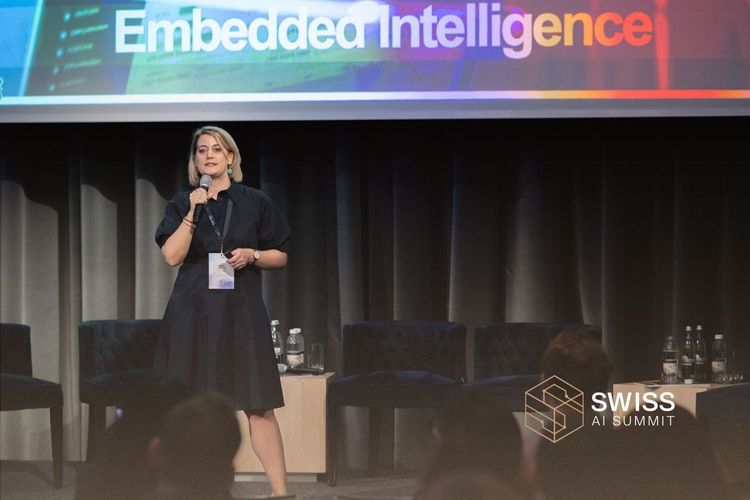
February 11, 2026
Embedded Intelligence
Swiss AI Summit 2025 Keynote with Nadine Ebmeyer, CEO @ BANQR
-

February 10, 2026
Enterprise AI Beyond the Hype
Swiss AI Summit 2025 Keynote with Dr. Dorian Selz, Founder & CEO @ Squirro AG
-

February 9, 2026
From AI Ambition to Scalable Impact
Swiss AI Summit 2025 Keynote with Wanja Bont, Partner @ PVL Partners
-
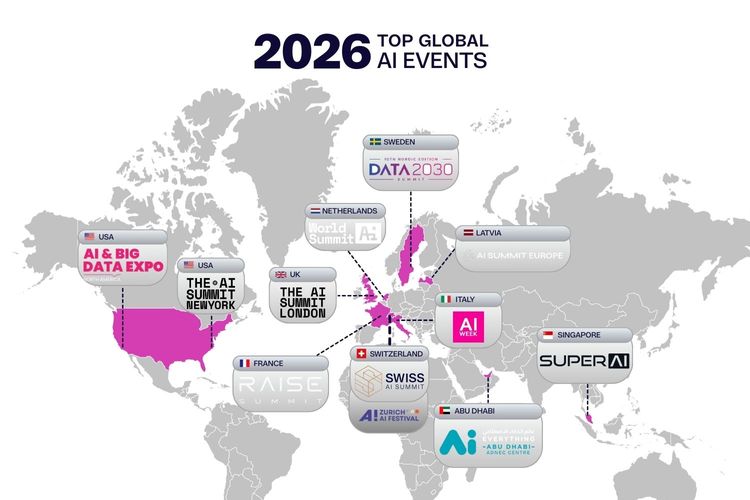
February 6, 2026
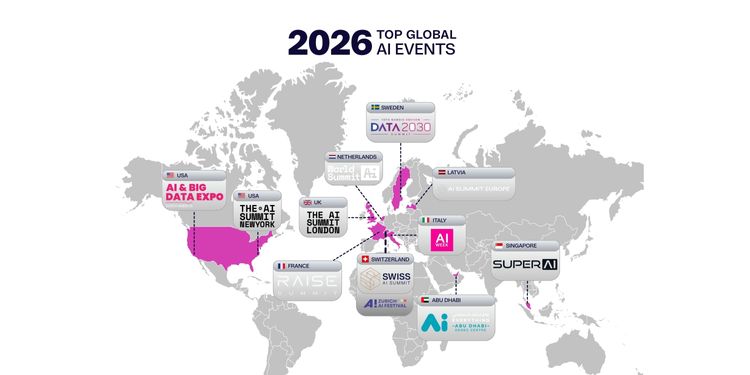
Swiss AI Summit listed as a top Global AI Event
Read more about the Article and our Listing by DigitalMara.
-

February 5, 2026
EU-INC. One Legal Entity, One AI Rulebook:
What the EU’s Single Market Vision Means for Tech Companies and AI Innovation
-
November 2, 2025
Interview with: Lauren Hawker Zafer
How Squirro’s Lauren Hawker Zafer views Zurich’s growing AI ecosystem
-
October 8, 2025
PRESS RELEASE: SwissCognitive and Swiss AI Summit join forces
Strengthening business-driven AI adoption and dialogue in Switzerland and beyond
-

October 1, 2025
Article: General-Purpose AI Code of Practice
From Voluntary Code to Strategic Standard: leveraging the GPAI Code of Practice.
-
September 29, 2025
News: The Swiss AI Summit Ecosystem
Switzerland's holistic Platform for AI Innovation
-

September 10, 2025
Article: Escaping the 85% Failure Trap:
Boost Your AI with Quantum-Enhanced Time Series Forecasting
-

September 10, 2025
Article: AI as the Brain of Tomorrow’s Financial System
Insights from Pathway 2035 for Financial Innovation – Your Navigator
-

September 8, 2025
Article: Shaping the Future
AI for Good Global Summit 2025 as the UN’s Premier Forum for AI Innovation
-
September 7, 2025
Article: Unlocking Generative AI in Finance
Solving Complex Data Challenges for Central Banks and Government Authorities
-

September 3, 2025
Article: THE FIVE TRUTHS OF AI - 2025 PERSPECTIVE
Let's explore the evolved "5 Truths of AI" that have emerged in 2025.
-

September 2, 2025
Article: Masumi - The PayPal for AI Agents
“We want to build the PayPal for AI agents.”
























Share via: