


Author

Yves Zischek
Managing Director Switzerland & Austria , Digital Realty
Published on:
October 26, 2026
Why Switzerland Is well positioned for the Private AI Era
Interview with Yves Zischek: Why Switzerland Is well positioned for the Private AI Era
As organizations move from AI pilots to production, questions around data control, connectivity, infrastructure and trust are becoming more urgent. Yves Zischek discusses what the 2026 Global Data Insights Survey reveals for Switzerland and how Digital Realty’s continued investment in Zurich supports the next phase of AI adoption.
The Global Data Insights Survey 2026 highlights growing interest in Sovereign and Private AI. Why are these topics becoming increasingly important for organizations?
Yves Zischek: The conversation around AI is evolving rapidly. Organizations are moving beyond experimentation and focusing on how AI can be deployed securely, governed effectively and scaled across the business.
Digital Realty’s Global Data Insights Survey, or GDIS, is a global study examining how organizations are adopting, scaling and operationalizing AI. The 2026 research gathered insights from more than 2,100 IT decision-makers across 19 countries and 11 industries. It shows that 86% of enterprise leaders are exploring or actively implementing Sovereign AI, while more than half host AI models in private cloud environments.
For Switzerland, this is particularly relevant. Swiss organizations operate in an environment where trust, privacy, resilience and regulatory certainty are highly valued. As AI becomes embedded in business-critical processes, organizations want to innovate while retaining appropriate control over sensitive data, intellectual property and workload governance.
What exactly is Private AI, and how is it connected to Sovereign AI?
Yves Zischek: Private AI is an operating approach that enables an organization to use advanced AI capabilities while retaining control over sensitive data, AI workloads, governance policies and infrastructure.
Sovereign AI describes the broader objective of keeping data, models and AI operations under the governance of a defined organization or jurisdiction. Private AI can be one practical architecture for achieving that objective. It allows organizations to decide where data should remain, where models should run and how security and compliance policies should be applied across the environment.
This does not mean avoiding public cloud or isolating the business from innovation. In practice, Private AI is often hybrid and distributed. The goal is to place each component where it best meets requirements for performance, security, compliance, resilience and cost.
Why is Switzerland well positioned for this next phase of AI adoption?
Yves Zischek: Switzerland combines several strengths that are increasingly important in the AI economy: a strong culture of trust, political and economic stability, high standards for data protection, a skilled workforce and excellent international connectivity.
The country is also home to many organizations in financial services, healthcare, life sciences, public administration and advanced manufacturing. These sectors need innovation, but they also have demanding requirements around data governance, operational resilience and security.
That makes Switzerland a compelling environment for AI strategies in which innovation and control must coexist. Private AI is especially relevant because it gives organizations a way to benefit from AI while aligning the architecture with their own data and governance requirements.
The survey suggests that infrastructure has become a major constraint for AI adoption. Why?
Yves Zischek: Production AI creates very different requirements from a limited pilot. Organizations need scalable compute capacity, high-performance connectivity, secure access to distributed data, sufficient power, advanced cooling and an architecture designed for future growth.
GDIS found that a lack of specialized infrastructure is now the leading AI constraint for 40% of IT leaders, compared with 9% in 2024. In parallel, 48% plan to retire at least part of their existing data-centre estate. These findings show why infrastructure has moved from a background technical consideration to a strategic business decision.
If the infrastructure is not ready, a promising use case can be difficult or expensive to operationalize. The foundation therefore needs to be considered from the beginning, alongside the model, the data and the desired business outcome.
How does data location influence an organization’s AI strategy?
Yves Zischek: AI rarely operates in one place. Data may remain in Switzerland, models may run across private and public environments, and employees or customers may access services from multiple locations.
GDIS reports that 88% of organizations now follow a distributed data approach, up from 78% two years ago, while 92% connect data-location decisions directly to their AI strategy. This matters because the distance and connectivity between data, compute, clouds and users can affect latency, resilience, security, compliance and data-movement costs.
AI strategy and data-location strategy are therefore becoming inseparable. Organizations need an architecture that connects distributed resources securely without creating new silos.
How does Digital Realty support Swiss organizations building Private AI environments?
Yves Zischek: Customers need more than space and power. They need a trusted, connected foundation that allows data, clouds, AI platforms, carriers and business partners to interact securely.
Digital Realty brings together locally operated infrastructure, a highly connected Zurich campus, direct access to cloud and network ecosystems, and a gateway to PlatformDIGITAL®, our global data-centre platform. This gives organizations flexibility in deciding where workloads and data should run while maintaining the connectivity required for distributed AI architectures.
The objective is to help customers create scalable environments where governance, resilience and connectivity are built into the architecture. That is essential for Private AI, because control is not only about where data is stored. It is also about how data moves, how systems connect and how consistently policies can be applied.
Digital Realty recently started construction of ZUR4 in Glattbrugg. How does this expansion reflect what you are seeing in the market?
Yves Zischek: ZUR4 reflects the growing demand for high-performance, connected and locally operated digital infrastructure in Switzerland. The new facility will add approximately 15 MW of IT capacity across around 6,300 square metres and is designed to support high-density deployments and AI workloads.
ZUR4 will expand our existing Zurich campus alongside ZUR1, ZUR2 and ZUR3. It will give customers access to extensive connectivity options and to PlatformDIGITAL®, which spans more than 300 data centres worldwide. At the same time, it expands highly secure capacity operated locally in Switzerland for customers with data-location, resilience and connectivity requirements.
This investment is therefore not only about adding capacity. It strengthens the connected ecosystem available to enterprises, cloud providers and digital platforms in Zurich and supports Switzerland’s role as an important European hub for data and AI.
Sustainability is also becoming part of AI infrastructure decisions. How is this addressed in Switzerland?
Yves Zischek: AI infrastructure must be designed not only for performance and resilience, but also for efficient and responsible operation. Digital Realty’s European portfolio, including its data centres in Switzerland, is powered by 100% renewable energy.
Within the Zurich campus, ZUR2 received the first PLATINUM Plus certification from the Swiss Datacenter Efficiency Association. ZUR4 is being designed with modern cooling systems and an energy-efficient architecture to support high-density and AI workloads.
As AI demand grows, infrastructure decisions must bring capacity, connectivity and sustainability together. These elements cannot be treated as separate priorities.
What role does trust play in turning AI adoption into business value?
Yves Zischek: Trust determines whether AI will be accepted and used at scale. Customers want to understand how their information is handled. Regulators expect transparency and accountability. Boards need governance structures that make risks visible and manageable.
Organizations therefore need to demonstrate not only that an AI application works, but also that it can be operated responsibly, securely and consistently. Private AI supports that objective by making governance, security, data control and infrastructure choices part of the operating model.
For Switzerland, trust has long been a core business value. Extending that trust into AI can become an important strength for the country’s digital economy.
What should Swiss business leaders prioritize when reviewing their AI strategy?
Yves Zischek: They should begin with the business outcome, but assess the foundation at the same time. Which data will the use case require? Where should the workload run? What governance and security controls are needed? How will the architecture scale if the pilot succeeds? And how will value be measured?
The most resilient strategies connect the use case, data architecture, governance, workload placement, connectivity and operating model from the beginning. This reduces the risk of successful experiments becoming difficult to operationalize.
The next phase of AI will be shaped by organizations that can combine innovation with trust, performance with governance and global reach with local control.
About Yves Zischek
Yves Zischek is Managing Director of Digital Realty Switzerland and Austria and Vice President of the Swiss Data Center Association. He is a prominent voice in the transformation of Switzerland’s digital infrastructure sector, promoting an approach in which technological progress, operational excellence and environmental responsibility reinforce one another.
His work includes advancing industry collaboration and public understanding of the role digital infrastructure plays in Switzerland’s economy and society. He has also championed initiatives that connect data-centre growth with sustainability, including energy efficiency and the recovery of excess heat for local district-heating networks. In 2026, he was recognized as one of Switzerland’s “Digital Shapers” in the category “The Energizers.”
Share via:
Read more
-
October 15, 2026
AI: Threat or Opportunity? What a Translator Learned from Kodak’s Downfall
How Innosuisse R&D helped turn AI disruption into LegalTech growth.
-
October 13, 2026
The Myth of Fast: Why Switzerland's AI Advantage Depends on What It Refuses to Rush
Clouds on Mars’ perspective on AI adoption and what's at stake for Switzerland
-
October 9, 2026
AI in financial services: From experimentation to trust
Turning AI prototypes into trusted, scalable financial solutions.
-
October 7, 2026
Intelligent Resilience: Rethinking Financial Governance in the Era of Digital Fraud and AI
Leverage AI and real-time analytics to meet FINMA’s dynamic fraud guidance.
-
September 7, 2026
2026 EDITION: Autonomy & Sovereignty
The Swiss AI Summit announces the theme of the 2026 Edition.
-
July 7, 2026
Portugal's State Reform in the Age of AI
What Governments Can Learn from a New Model of Public Administration
-
June 30, 2026
From Code Completion to Autonomous Coding Agents
Our Key Takeaways from our Vibe Coding Session hosted by OST
-
May 14, 2026
The geopolitics of data sovereignty
The political, economic, and strategic battle over digital trust
-

March 25, 2026
Swiss AI Magazine 2026 Launch
A recap of the Swiss AI Magazine 2026 launch event in Zurich at Headsquarter.
-

March 11, 2026
How to create real business value from AI
Insights from the First Swiss AI Summit Community Event of 2026
-
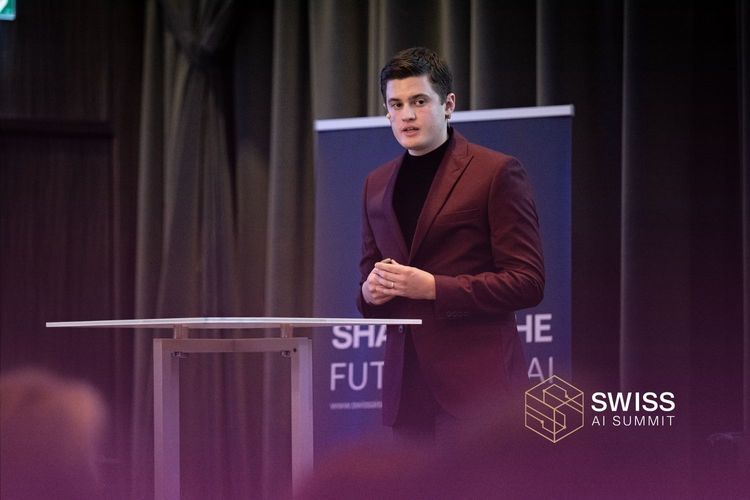
February 13, 2026
Agentic AI Orchestration
Swiss AI Summit 2025 Keynote with Georg M. V. Olowson from IBM.
-
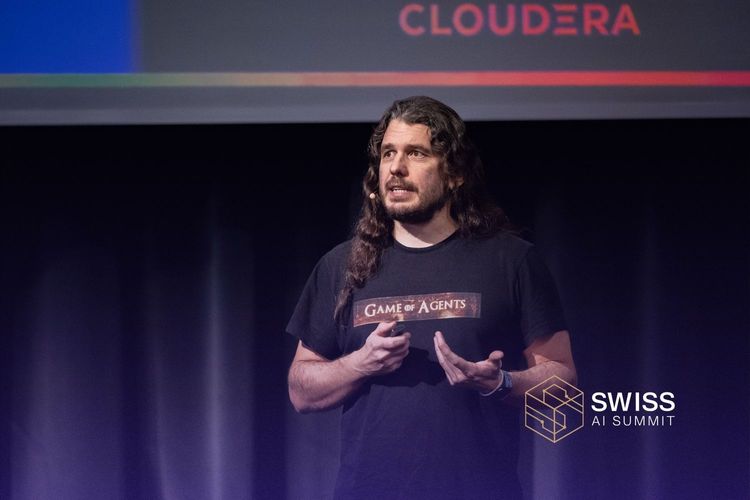
February 12, 2026
Driving Scalable AI Adoption
Swiss AI Summit 2025 Keynote with Sergio Gago, CTO @ Cloudera
-
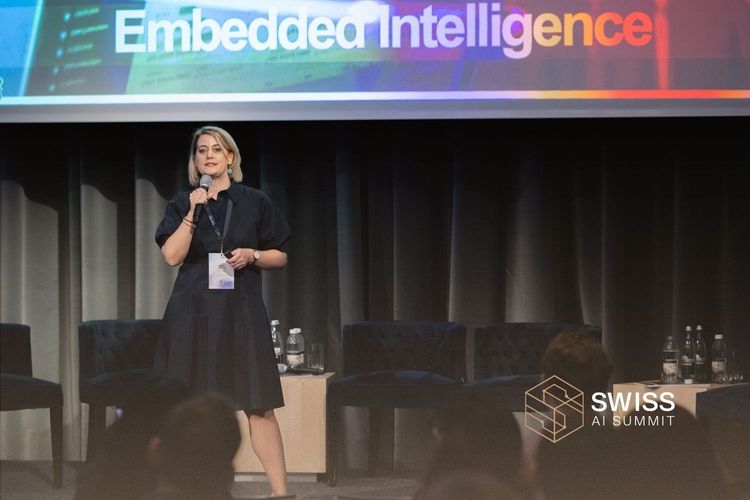
February 11, 2026
Embedded Intelligence
Swiss AI Summit 2025 Keynote with Nadine Ebmeyer, CEO @ BANQR
-

February 10, 2026
Enterprise AI Beyond the Hype
Swiss AI Summit 2025 Keynote with Dr. Dorian Selz, Founder & CEO @ Squirro AG
-
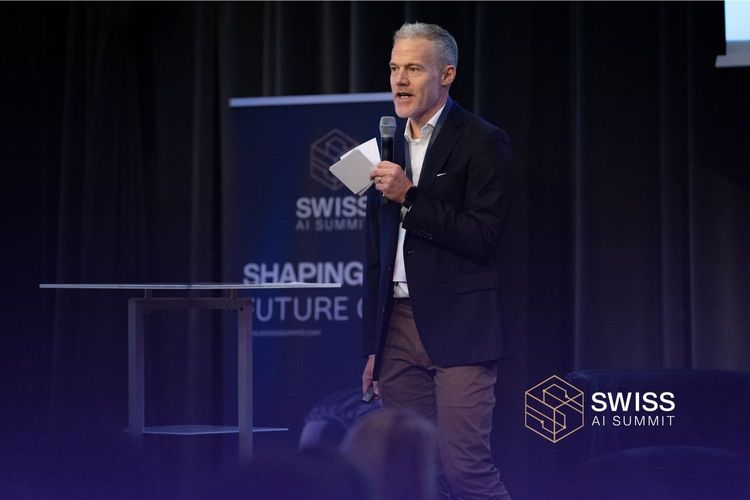
February 9, 2026
From AI Ambition to Scalable Impact
Swiss AI Summit 2025 Keynote with Wanja Bont, Partner @ PVL Partners
-
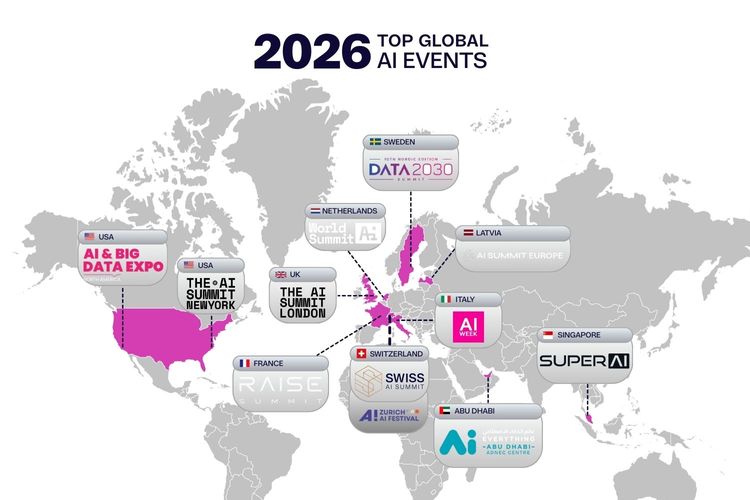
February 6, 2026
Swiss AI Summit listed as a top Global AI Event
Read more about the Article and our Listing by DigitalMara.
-

February 5, 2026
EU-INC. One Legal Entity, One AI Rulebook:
What the EU’s Single Market Vision Means for Tech Companies and AI Innovation
-
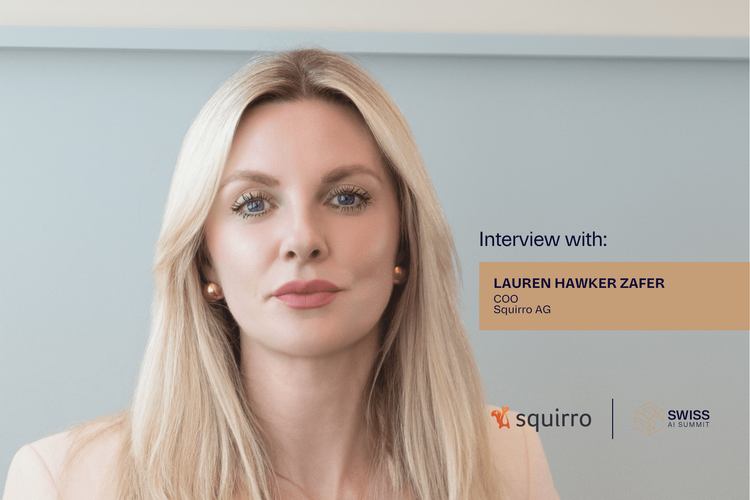
November 2, 2025
Interview with: Lauren Hawker Zafer
How Squirro’s Lauren Hawker Zafer views Zurich’s growing AI ecosystem
-
October 8, 2025
PRESS RELEASE: SwissCognitive and Swiss AI Summit join forces
Strengthening business-driven AI adoption and dialogue in Switzerland and beyond
-

October 1, 2025
Article: General-Purpose AI Code of Practice
From Voluntary Code to Strategic Standard: leveraging the GPAI Code of Practice.
-
September 29, 2025
News: The Swiss AI Summit Ecosystem
Switzerland's holistic Platform for AI Innovation
-
September 10, 2025
Article: Escaping the 85% Failure Trap:
Boost Your AI with Quantum-Enhanced Time Series Forecasting
-

September 10, 2025
Article: AI as the Brain of Tomorrow’s Financial System
Insights from Pathway 2035 for Financial Innovation – Your Navigator
-
September 8, 2025
Article: Shaping the Future
AI for Good Global Summit 2025 as the UN’s Premier Forum for AI Innovation
-
September 7, 2025
Article: Unlocking Generative AI in Finance
Solving Complex Data Challenges for Central Banks and Government Authorities
-
September 3, 2025
Article: THE FIVE TRUTHS OF AI - 2025 PERSPECTIVE
Let's explore the evolved "5 Truths of AI" that have emerged in 2025.
-

September 2, 2025
Article: Masumi - The PayPal for AI Agents
“We want to build the PayPal for AI agents.”

















Share via: