
Author

Jonas Tresch
Associate @ Kellerhals Carrard , Regulatory Advisor @ Swiss Fintech Innovations (SFTI)
Published on:
October 9, 2026
AI in financial services: From experimentation to trust
AI in financial services: from experimentation to trust
It is no longer a matter of whether AI works in financial services. What matters is which applications create demonstrable value, how they can be integrated into the core business and under what conditions we are willing to trust them. We can only assess whether such systems deserve trust if we understand and explain the results, identify where the relevant risks materialise, determine how they can be mitigated, and establish who ultimately assumes responsibility.
The issue of trust becomes even more pressing with the emergence of AI agents. Such systems do not merely provide answers. They can plan tasks, execute individual steps, access other systems and act independently within a defined or even undefined framework. This opens new opportunities but also raises fundamental questions for financial institutions around responsibility, control, client profiles and access to services. While agents can operate within predefined permissions, defining the appropriate scope of those permissions and maintaining effective control over their actions are key trust challenges.
Under the title “Building Trustworthy AI Frameworks in Financial Institutions”, SFTI | Swiss Fintech Innovations will bring together representatives from banks, insurers, technology companies and consulting firms at the Swiss AI Summit. The roundtable will explore what trustworthy AI means for financial institutions in concrete terms – not as an abstract guiding principle, but as a practical design challenge.
When prototypes become business reality
Many financial institutions now have a considerable number of AI initiatives. The greater challenge is often no longer to identify a possible use case. Today’s real challenge is selecting the relevant use cases, measuring their benefits properly, and taking promising solutions beyond the pilot stage.
Even when all relevant aspects of the SFTI Framework have been considered, from governance and compliance through organisational readiness and ongoing monitoring, a technically convincing prototype is not yet a viable application. When moving into production, additional questions arise:
- Is the output reliable even under changing conditions?
- Who bears business responsibility?
- How is the application monitored?
- And does the expected benefit justify the effort and risk involved?
Trustworthiness and scalability are sometimes treated as opposites. Governance may then appear as an additional hurdle that slows down promising innovation. A well-designed framework, however, can have the opposite effect. By establishing clear approval criteria, defined responsibilities, and continuous monitoring, governance can provide the confidence needed to scale AI solutions responsibly and efficiently.
It is therefore particularly interesting to discuss how institutions recognise scalable use cases, which criteria they use to prioritise initiatives and how they decide whether to continue, adapt or stop a pilot.
Trustworthy AI becomes a practical question
The question of trust becomes particularly visible where AI no longer merely supports analysis, but moves closer to decisions, processes and client interfaces. AI agents could in future collect information, compare offers or guide clients through financial decisions.
This raises new questions: Who controls this interface? According to which criteria does an agent act? How transparent must recommendations be? And when is human intervention required?
Trustworthy AI thus becomes highly practical. It is about reliable systems, high-quality data, understandable results, clear responsibilities, ongoing monitoring and a culture that empowers employees to use AI responsibly and challenge outcomes when necessary. In the financial sector in particular, trust must not only be asserted – it must be embedded in the organisation. Governance is therefore neither a purely technical nor a purely legal task. It emerges from the interaction of business, IT, risk, compliance, legal and leadership.
What financial institutions need to discuss now
The SFTI roundtable at the Swiss AI Summit will address how financial institutions can enable innovation without losing sight of trust, control and responsibility.
It is not intended to present a supposedly definitive blueprint. Business models, risk profiles and use cases differ too widely between individual institutions. Instead, the focus will be on practical experience, different positions and the questions that have not yet been conclusively answered.
Because trust in AI is not created by a single control instrument. It is created through comprehensible decisions, clear responsibilities and the ability to learn from experience. Which elements financial institutions should address first will be one of the questions to be discussed at the roundtable.
Share via:
Read more
-

October 26, 2026
Why Switzerland Is well positioned for the Private AI Era
Interview with Yves Zischek, MD Switzerland & Austria @ Digital Realty
-
October 15, 2026
AI: Threat or Opportunity? What a Translator Learned from Kodak’s Downfall
How Innosuisse R&D helped turn AI disruption into LegalTech growth.
-
October 13, 2026
The Myth of Fast: Why Switzerland's AI Advantage Depends on What It Refuses to Rush
Clouds on Mars’ perspective on AI adoption and what's at stake for Switzerland
-
October 7, 2026
Intelligent Resilience: Rethinking Financial Governance in the Era of Digital Fraud and AI
Leverage AI and real-time analytics to meet FINMA’s dynamic fraud guidance.
-
September 7, 2026
2026 EDITION: Autonomy & Sovereignty
The Swiss AI Summit announces the theme of the 2026 Edition.
-
July 7, 2026
Portugal's State Reform in the Age of AI
What Governments Can Learn from a New Model of Public Administration
-
June 30, 2026
From Code Completion to Autonomous Coding Agents
Our Key Takeaways from our Vibe Coding Session hosted by OST
-
May 14, 2026
The geopolitics of data sovereignty
The political, economic, and strategic battle over digital trust
-

March 25, 2026
Swiss AI Magazine 2026 Launch
A recap of the Swiss AI Magazine 2026 launch event in Zurich at Headsquarter.
-

March 11, 2026
How to create real business value from AI
Insights from the First Swiss AI Summit Community Event of 2026
-
February 13, 2026
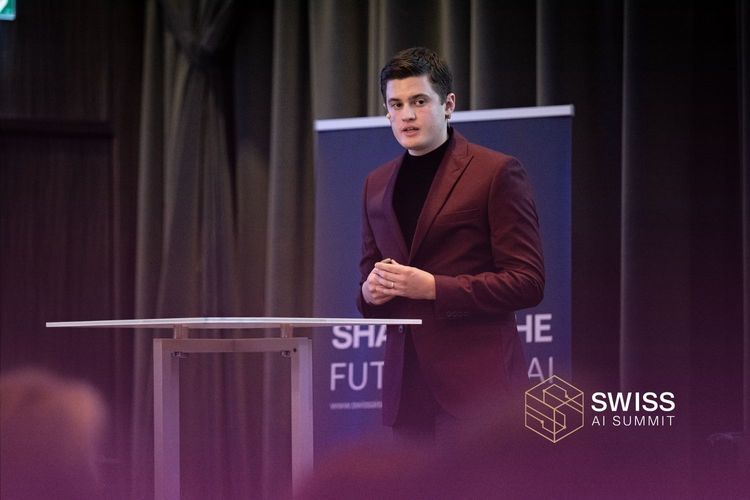
Agentic AI Orchestration
Swiss AI Summit 2025 Keynote with Georg M. V. Olowson from IBM.
-
February 12, 2026
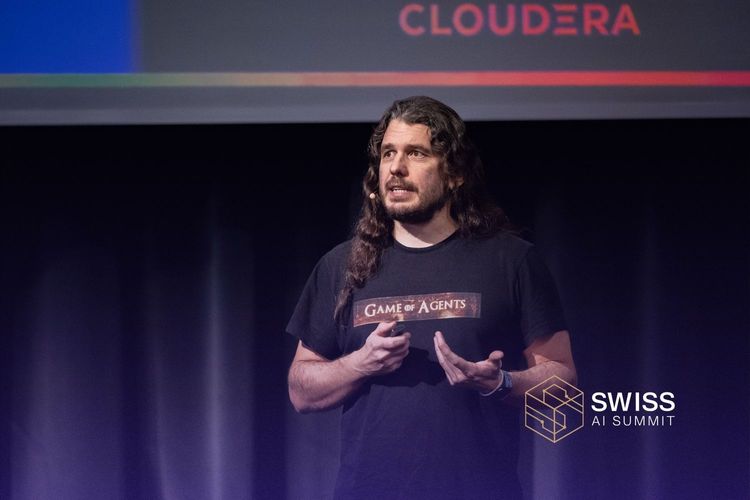
Driving Scalable AI Adoption
Swiss AI Summit 2025 Keynote with Sergio Gago, CTO @ Cloudera
-
February 11, 2026
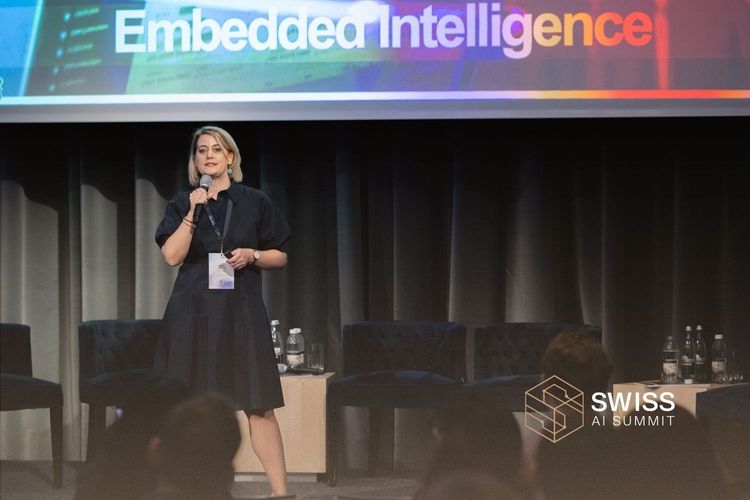
Embedded Intelligence
Swiss AI Summit 2025 Keynote with Nadine Ebmeyer, CEO @ BANQR
-

February 10, 2026
Enterprise AI Beyond the Hype
Swiss AI Summit 2025 Keynote with Dr. Dorian Selz, Founder & CEO @ Squirro AG
-
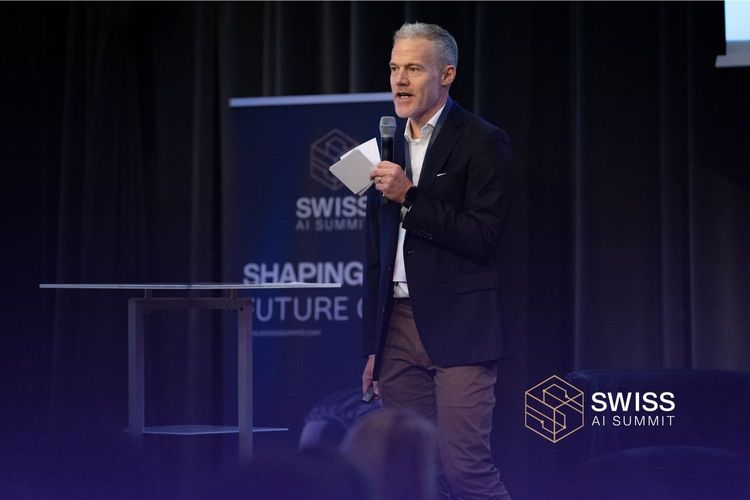
February 9, 2026
From AI Ambition to Scalable Impact
Swiss AI Summit 2025 Keynote with Wanja Bont, Partner @ PVL Partners
-
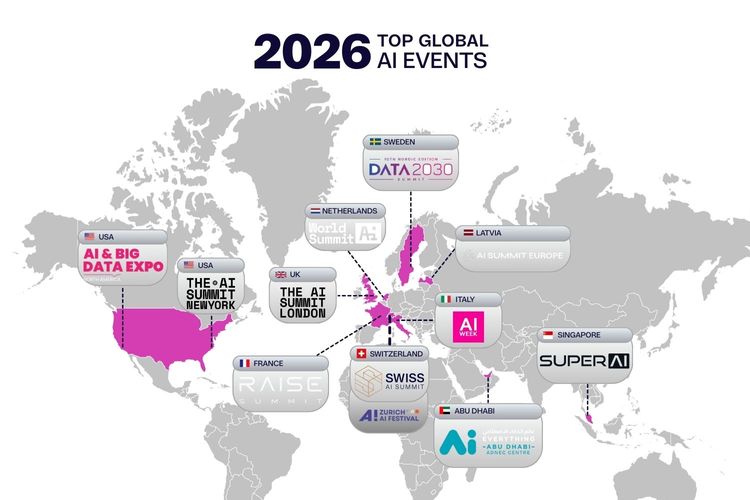
February 6, 2026
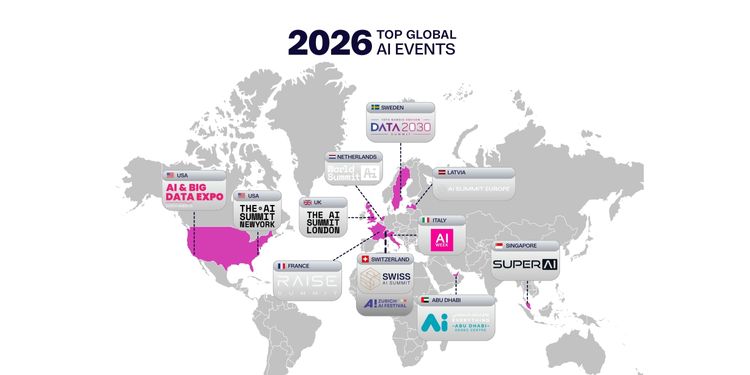
Swiss AI Summit listed as a top Global AI Event
Read more about the Article and our Listing by DigitalMara.
-

February 5, 2026
EU-INC. One Legal Entity, One AI Rulebook:
What the EU’s Single Market Vision Means for Tech Companies and AI Innovation
-
November 2, 2025
Interview with: Lauren Hawker Zafer
How Squirro’s Lauren Hawker Zafer views Zurich’s growing AI ecosystem
-
October 8, 2025
PRESS RELEASE: SwissCognitive and Swiss AI Summit join forces
Strengthening business-driven AI adoption and dialogue in Switzerland and beyond
-

October 1, 2025
Article: General-Purpose AI Code of Practice
From Voluntary Code to Strategic Standard: leveraging the GPAI Code of Practice.
-
September 29, 2025
News: The Swiss AI Summit Ecosystem
Switzerland's holistic Platform for AI Innovation
-

September 10, 2025
Article: Escaping the 85% Failure Trap:
Boost Your AI with Quantum-Enhanced Time Series Forecasting
-

September 10, 2025
Article: AI as the Brain of Tomorrow’s Financial System
Insights from Pathway 2035 for Financial Innovation – Your Navigator
-
September 8, 2025
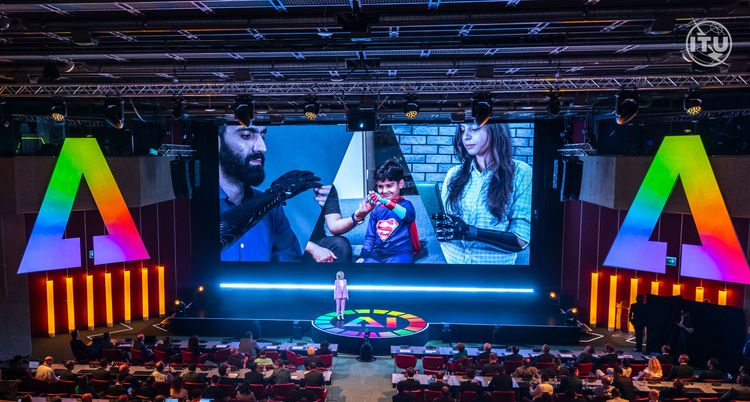
Article: Shaping the Future
AI for Good Global Summit 2025 as the UN’s Premier Forum for AI Innovation
-
September 7, 2025
Article: Unlocking Generative AI in Finance
Solving Complex Data Challenges for Central Banks and Government Authorities
-
September 3, 2025
Article: THE FIVE TRUTHS OF AI - 2025 PERSPECTIVE
Let's explore the evolved "5 Truths of AI" that have emerged in 2025.
-
September 2, 2025
Article: Masumi - The PayPal for AI Agents
“We want to build the PayPal for AI agents.”























Share via: