
Author
Tatjana Bapst
Communications Division , Innosuisse
Published on:
October 15, 2026
AI: Threat or Opportunity? What a Translator Learned from Kodak’s Downfall
AI: Threat or Opportunity? What a Translator Learned from Kodak’s Downfall
As AI began to reshape the translation industry, Paula Reichenberg decided to explore how this technology could reinforce rather than replace specialised expertise. With research partners and support from Innosuisse, this idea evolved into a series of innovation projects, a new company, and new expertise anchored in Fribourg.
Paula Reichenberg founded Hieronymus – Translations by Lawyers for Lawyers in 2007. The company specialises in legal and financial translations, combining linguistic expertise with an in-depth understanding of complex legal matters.
Over time, however, advances in machine translation began to change the market. Clients increasingly started handling standard translations themselves, challenging the company’s established business model.
Rather than viewing AI as a threat, Paula started exploring how it could complement the expertise developed within Hieronymus and open up new opportunities. For her, this meant recognising early on that technological change had to be embraced rather than ignored.
“During my MBA, I kept one little phrase in mind: ‘Click-Clack Kodak.’ It was shorthand for how quickly a market leader can lose relevance if it fails to embrace and harness a new technology. When machine translation started changing our market, I did not want Hieronymus to make that mistake”, explains Paula.
When businesses and researchers join forces
To explore this question, Paula needed expertise that was not yet available within the company. Robert van Kommer, an ICT innovation mentor at Innosuisse, introduced her to Professor Jean Hennebert and the iCoSys Institute at the School of Engineering and Architecture of Fribourg (HEIA-FR).
The partners brought different but complementary strengths to the table. Hieronymus understood legal and financial language, the needs of its clients and the realities of handling confidential information. The research team contributed its expertise in natural language processing, machine learning and data engineering.
An idea with potential?
Their first Innosuisse-supported innovation project began in 2020. Known as Datalambic, it explored how specialised linguistic data could be prepared and used to develop a secure neural translation solution for the legal and financial sectors.
The aim was to automate and accelerate parts of the translation process while keeping professionals in control where legal nuance required irreplaceable human expertise. The collaboration laid the technological foundations for LexMachina, a specialised translation solution adapted to the needs of Swiss legal and financial experts.
Innosuisse support gave the partners the opportunity to test an ambitious idea whose technological feasibility and market potential still had to be demonstrated. It allowed Hieronymus to work with a scientific partner and acquire new capabilities without having to build all the required expertise alone.
Moving forward with support from Innosuisse
The first project was followed by a second collaborative innovation project, again supported by Innosuisse. In 2022, Neur.on AI Solutions SA was founded in Fribourg as a spin-off of Hieronymus to continue developing and commercialising the technology.
Neur.on subsequently developed Corrext, a platform designed to support legal and financial professionals throughout the translation and revision process. Rather than removing human involvement, the solution helps users identify passages requiring particular attention and combine automated processing with specialised legal and linguistic expertise.
In 2024, a third stage began with a Start-up Innovation Project supported by Innosuisse. The different projects accompanied the development from an initial research question to a technology company preparing its solution for the market. According to Alliance Innovation, which supports companies in developing research collaborations and Innosuisse projects, the objectives established through the Innosuisse proposals continued to serve as a roadmap for the company.
An interdisciplinary team as the key to success
As technology developed, Neur.on needed people who could bridge several fields. By October 2024, the company had grown to a team of 11, bringing together expertise in linguistics, law, engineering and data science.
Several students who had worked on the innovation projects were later recruited by the company. Their transition from applied research into company roles provides a concrete example of how collaboration between research and industry can support the development of highly qualified specialists. For Paula, however, building the right team was not only about bringing different areas of expertise together, but also about creating the conditions for genuine interdisciplinary collaboration.
“Legal AI needs an unusual mix of people: lawyers, linguists, engineers and data scientists who are outstanding in their own field, modest about what they do not know, and sincerely open to learning from each other. Once that human neural network starts functioning, you do everything you can to keep it together. That was one reason we decided to raise capital: once you have the right team, you know you can build the product”, she emphasises.
Swiss roots that endure and make a difference in the market
In 2026, Neur.on entered a new phase of development. The company was acquired by Legal 230, Europe’s leading pure player in legal translation, while its eight-member Legal NLP team joined the European Legal AI scale-up Noxtua.Neur.on has kept its headquarters in Fribourg, and all servers and data flows remain in Switzerland.
Swiss data sovereignty has always been one of Neur.on’s USPs and a core focus of its infrastructure. For Swiss public authorities, law firms handling highly confidential matters, and industrial companies protecting sensitive know-how and trade secrets, keeping data and processing in Switzerland is a major requirement. And it has also proved to be a strong selling point for international legal and financial clients, who value Swiss infrastructure for the confidentiality, legal certainty and control it provides over where their data is stored and processed.
Both Neur.on and Noxtua have maintained their presence in Fribourg, allowing the team to contribute to a wider European platform while remaining based in the region.
“The reason Noxtua came to Fribourg was simple: On ne change pas une équipe qui gagne. Noxtua understood the value of keeping together high performers who had already learned how to work with each other across very different disciplines and wanted to build on that”, Paula points out.
Share via:
Read more
-

October 26, 2026
Why Switzerland Is well positioned for the Private AI Era
Interview with Yves Zischek, MD Switzerland & Austria @ Digital Realty
-
October 13, 2026
The Myth of Fast: Why Switzerland's AI Advantage Depends on What It Refuses to Rush
Clouds on Mars’ perspective on AI adoption and what's at stake for Switzerland
-
October 9, 2026
AI in financial services: From experimentation to trust
Turning AI prototypes into trusted, scalable financial solutions.
-
October 7, 2026
Intelligent Resilience: Rethinking Financial Governance in the Era of Digital Fraud and AI
Leverage AI and real-time analytics to meet FINMA’s dynamic fraud guidance.
-
September 7, 2026
2026 EDITION: Autonomy & Sovereignty
The Swiss AI Summit announces the theme of the 2026 Edition.
-
July 7, 2026
Portugal's State Reform in the Age of AI
What Governments Can Learn from a New Model of Public Administration
-
June 30, 2026
From Code Completion to Autonomous Coding Agents
Our Key Takeaways from our Vibe Coding Session hosted by OST
-
May 14, 2026
The geopolitics of data sovereignty
The political, economic, and strategic battle over digital trust
-
March 25, 2026
Swiss AI Magazine 2026 Launch
A recap of the Swiss AI Magazine 2026 launch event in Zurich at Headsquarter.
-

March 11, 2026
How to create real business value from AI
Insights from the First Swiss AI Summit Community Event of 2026
-
February 13, 2026
Agentic AI Orchestration
Swiss AI Summit 2025 Keynote with Georg M. V. Olowson from IBM.
-
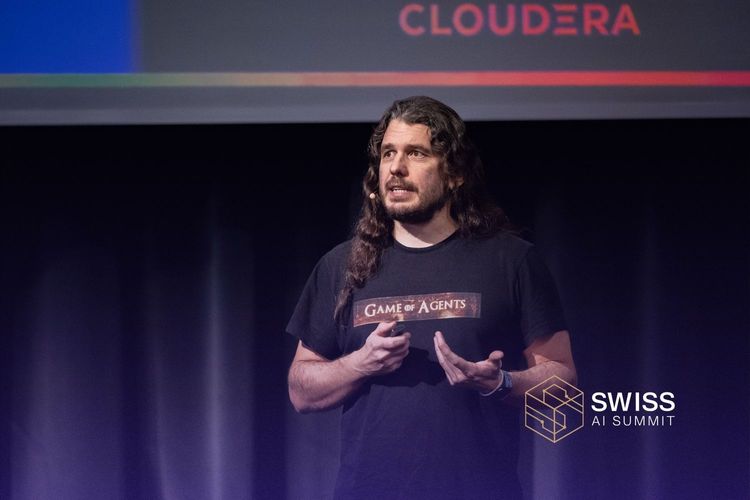
February 12, 2026
Driving Scalable AI Adoption
Swiss AI Summit 2025 Keynote with Sergio Gago, CTO @ Cloudera
-
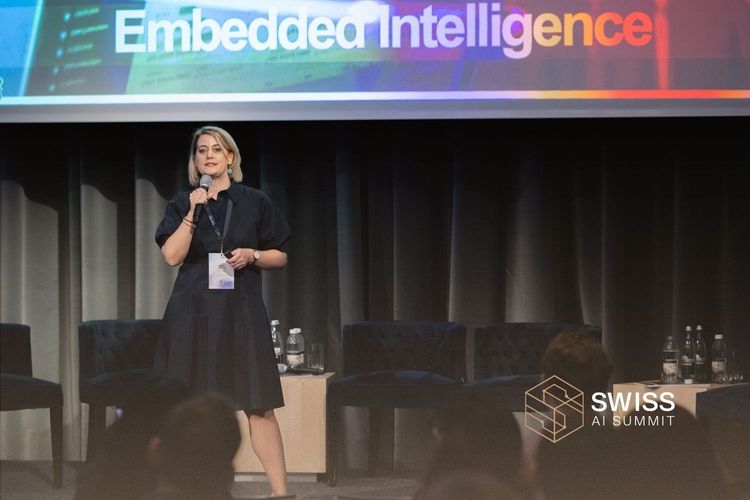
February 11, 2026
Embedded Intelligence
Swiss AI Summit 2025 Keynote with Nadine Ebmeyer, CEO @ BANQR
-
February 10, 2026
Enterprise AI Beyond the Hype
Swiss AI Summit 2025 Keynote with Dr. Dorian Selz, Founder & CEO @ Squirro AG
-
February 9, 2026
From AI Ambition to Scalable Impact
Swiss AI Summit 2025 Keynote with Wanja Bont, Partner @ PVL Partners
-
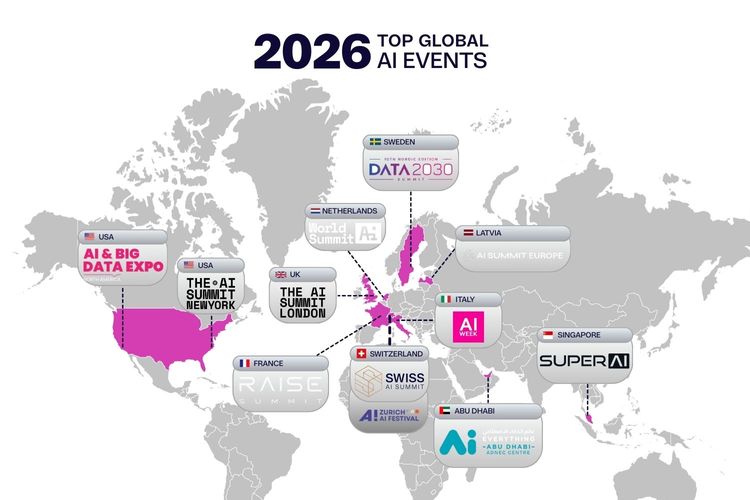
February 6, 2026
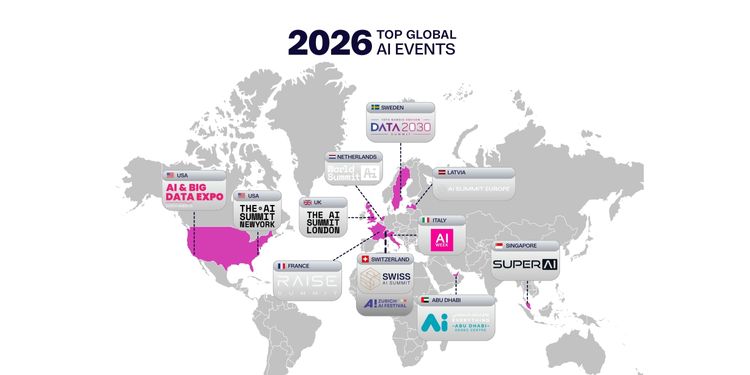
Swiss AI Summit listed as a top Global AI Event
Read more about the Article and our Listing by DigitalMara.
-
February 5, 2026
EU-INC. One Legal Entity, One AI Rulebook:
What the EU’s Single Market Vision Means for Tech Companies and AI Innovation
-
November 2, 2025
Interview with: Lauren Hawker Zafer
How Squirro’s Lauren Hawker Zafer views Zurich’s growing AI ecosystem
-

October 8, 2025
PRESS RELEASE: SwissCognitive and Swiss AI Summit join forces
Strengthening business-driven AI adoption and dialogue in Switzerland and beyond
-

October 1, 2025
Article: General-Purpose AI Code of Practice
From Voluntary Code to Strategic Standard: leveraging the GPAI Code of Practice.
-
September 29, 2025
News: The Swiss AI Summit Ecosystem
Switzerland's holistic Platform for AI Innovation
-

September 10, 2025
Article: Escaping the 85% Failure Trap:
Boost Your AI with Quantum-Enhanced Time Series Forecasting
-
September 10, 2025
Article: AI as the Brain of Tomorrow’s Financial System
Insights from Pathway 2035 for Financial Innovation – Your Navigator
-
September 8, 2025
Article: Shaping the Future
AI for Good Global Summit 2025 as the UN’s Premier Forum for AI Innovation
-
September 7, 2025
Article: Unlocking Generative AI in Finance
Solving Complex Data Challenges for Central Banks and Government Authorities
-
September 3, 2025
Article: THE FIVE TRUTHS OF AI - 2025 PERSPECTIVE
Let's explore the evolved "5 Truths of AI" that have emerged in 2025.
-
September 2, 2025
Article: Masumi - The PayPal for AI Agents
“We want to build the PayPal for AI agents.”














Share via: