

2026 EDITION: Autonomy & Sovereignty
Autonomy & Sovereignty
The new rules of business, work, and competition
AI is no longer just changing how businesses work. It is changing who and what gets to decide.
For years, the AI conversation was dominated by models, applications, and productivity. That conversation is now entering a new phase as AI moves from assisting work to performing work, from generating outputs to initiating actions, and from supporting decisions to increasingly participating in them.
As AI takes on a more active role within organisations, the question facing leaders is no longer simply “What can AI do for us?”, but rather “What should we allow AI to do and what must remain under our control?” This is becoming a defining leadership question of the next phase of artificial intelligence.
The challenge for leaders, therefore, is not simply deciding what AI can do, but defining where it can act, where humans must remain involved, and where human judgement must remain decisive. This is the strategic tension at the heart of the next phase of AI: giving organisations greater autonomy while retaining the ability to determine their own direction.
Key questions for decision-makers:
- What is the impact on our industry?
- What is the impact on our workforce; which roles, skills and responsibilities will change?
- What are our competitors doing & where do we risk falling behind if we don’t act?
It is this tension that defines the Swiss AI Summit 2026 Edition, centred on two forces that will increasingly shape organisations, industries and nations: AUTONOMY & SOVEREIGNTY.
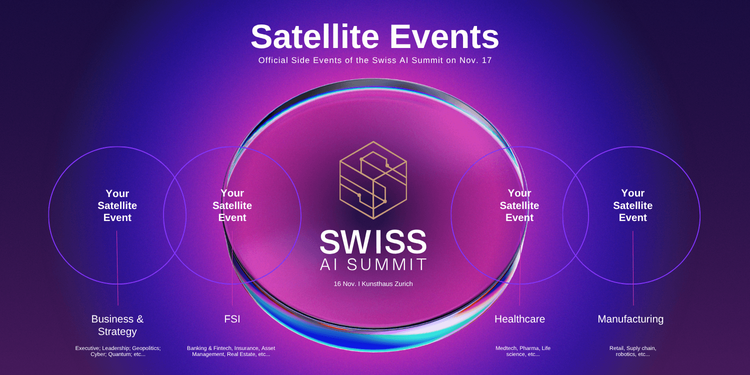
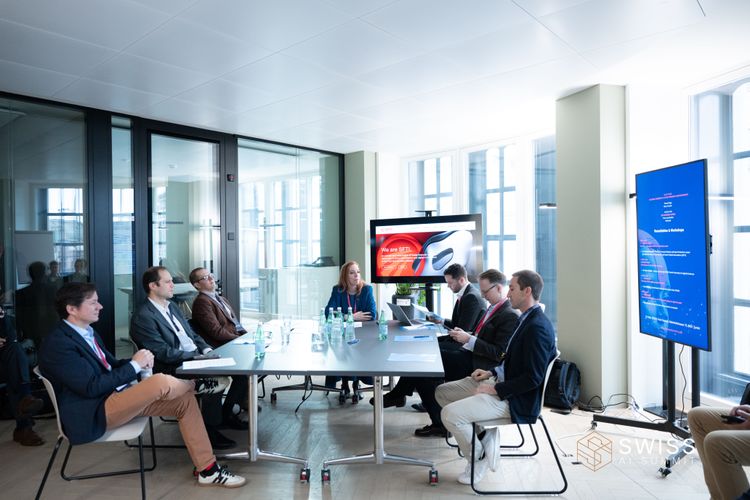
At the Swiss AI Summit 2026 Edition, this conversation will come together across Business & Strategy, Financial Services & Insurance, Healthcare & Life Sciences, and Manufacturing. Leaders from business, technology, government and academia will explore how AI is moving from experimentation to execution, and what it takes to scale it with confidence.
The programme brings together perspectives from across the AI ecosystem, with speakers including high-level governmental representatives, the Swiss Armed Forces, RUAG, Swisscom, leading banks and insurance companies from Switzerland, Hospitals and Manufacturing leaders. Together, they represent the range of perspectives needed to navigate a future in which AI increasingly shapes how organisations operate, decide and compete.
They are joined by leading organisations across technology, finance, research and innovation. Partners including IBM, NTT Data, NVIDIA, QuantumBasel, Oracle, and many others that bring expertise spanning AI infrastructure, innovation, financial services, enterprise technology and digital sovereignty, reflecting the breadth of the ecosystem required to turn AI ambition into real-world capability.
I. AUTONOMY
The enterprise of the future will not simply use more AI. It will be designed around AI.
With agent-based AI, systems are increasingly able to analyze information, make recommendations, execute processes, and coordinate ever-more-complex workflows, all while operating with a certain degree of autonomy within defined goals and parameters. This is not simply another step toward automation. It is a shift from AI that reacts to instructions to AI that can plan, act, and adapt.
As a result, AI is beginning to transform the very architecture of the organization. Functions that once relied on sequential human intervention can now be continuously managed by intelligent systems, while decisions are made closer to real time and processes can be designed to be adaptive rather than rigid. This enables organizations to become faster and more responsive, and increasingly capable of operating at machine speed.
However, autonomy is not the same as automation. While automation follows rules, autonomy acts within a mandate. That distinction changes everything because it shifts the question from what can be automated to where AI should be trusted to act independently. Leaders will therefore need to determine where AI can and should operate autonomously, where humans must remain in the loop, and where human judgement must remain decisive.
At the same time, this will require organisations to rethink more than individual processes. Operating models, governance structures, workforce strategies, and decision rights will need to evolve around a new relationship between humans and intelligent systems. Ultimately, the competitive question will not be who has the most AI, but who can build the organisation that knows how to use it best.
It will be: Who can build the most capable organisation while retaining the ability to direct it? How do you balance the risk? How will you redesign your governance?
II. SOVEREIGNTY
The more autonomous organisations become, the more dependent they can become on the infrastructure that enables that autonomy. AI does not exist in isolation; it relies on models, data, computing capacity, cloud infrastructure, semiconductor supply chains, platforms, standards and technology providers. These dependencies create enormous opportunities, but they also introduce new forms of strategic exposure.
For business leaders, sovereignty therefore means understanding where critical dependencies lie and retaining meaningful choices over them. It means knowing where data is stored, which infrastructure and models an organisation relies on, who controls the underlying platforms, and whether the organisation could adapt if those dependencies changed.
IMPORTANTE NOTE! Sovereignty does not mean isolation. It means the freedom to choose. It means maintaining the control, resilience and capabilities needed to determine your own technological direction. For businesses, this is increasingly a question of strategic competitiveness; for governments, of economic resilience and strategic autonomy; and for society, of who ultimately controls the systems on which critical infrastructure and economic activity depend.
Autonomous Business and Sovereignty are therefore deeply connected. As organisations give AI greater responsibility, they must also ensure that the underlying data, infrastructure, capabilities and governance remain within their strategic control. The challenge is not simply to build more autonomous organisations, but to build organisations that can act with greater autonomy without surrendering the ability to determine their own direction. This is the conversation we are bringing to the Swiss AI Summit 2026.
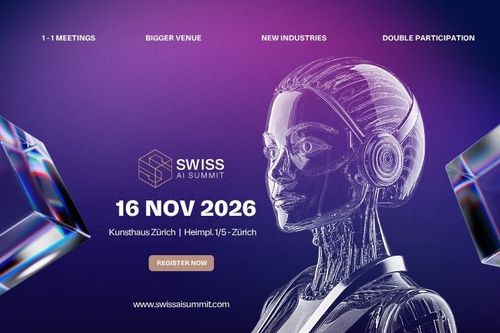
On 16 November 2026, at Kunsthaus Zurich, the Swiss AI Summit will bring these perspectives together around one defining question: how do we build organisations that can act with greater autonomy while remaining sovereign in their ability to decide?
The future will belong not simply to organisations that deploy AI, but to those that can harness its autonomy without giving up their own.
Share via:
Read more
-
July 7, 2026
Portugal's State Reform in the Age of AI
What Governments Can Learn from a New Model of Public Administration
-
June 30, 2026
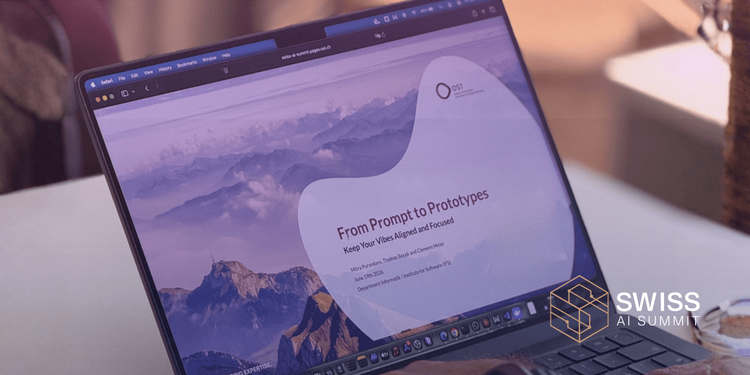
From Code Completion to Autonomous Coding Agents
Our Key Takeaways from our Vibe Coding Session hosted by OST
-
May 14, 2026
The geopolitics of data sovereignty
The political, economic, and strategic battle over digital trust
-
March 25, 2026
Swiss AI Magazine 2026 Launch
A recap of the Swiss AI Magazine 2026 launch event in Zurich at Headsquarter.
-

March 11, 2026
How to create real business value from AI
Insights from the First Swiss AI Summit Community Event of 2026
-
February 13, 2026
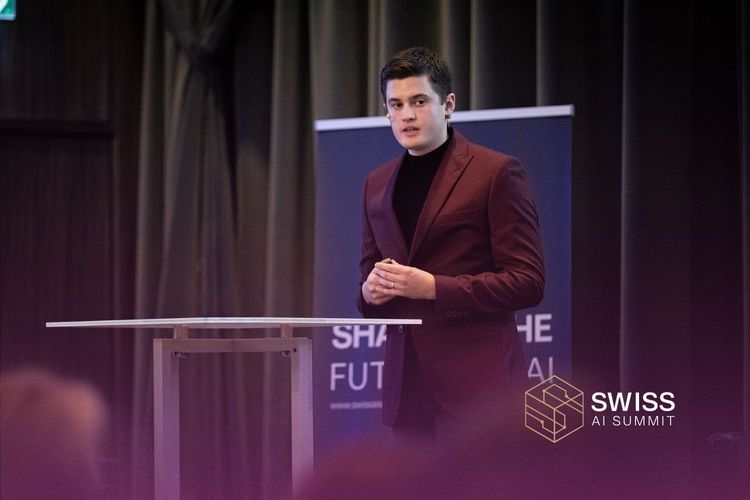
Agentic AI Orchestration
Swiss AI Summit 2025 Keynote with Georg M. V. Olowson from IBM.
-
February 12, 2026
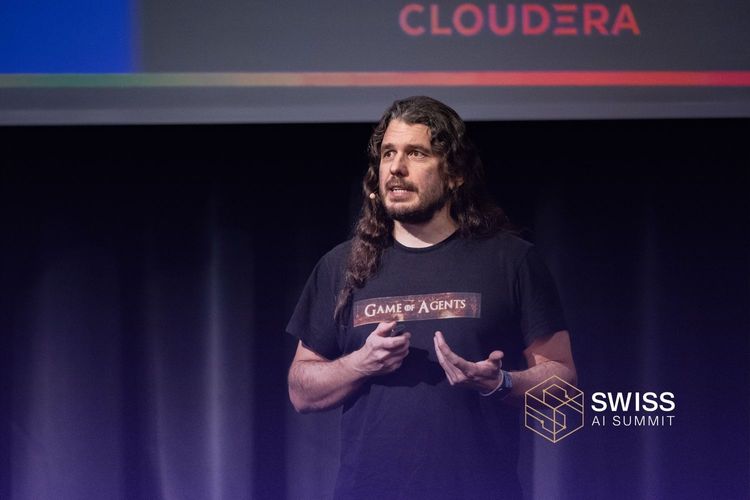
Driving Scalable AI Adoption
Swiss AI Summit 2025 Keynote with Sergio Gago, CTO @ Cloudera
-
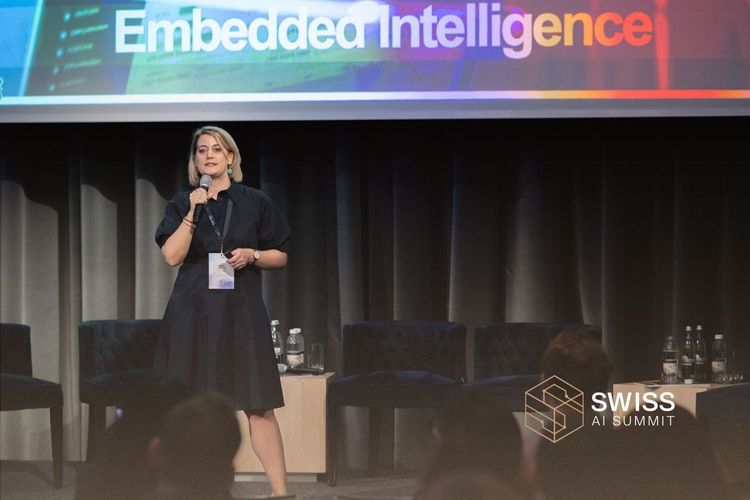
February 11, 2026
Embedded Intelligence
Swiss AI Summit 2025 Keynote with Nadine Ebmeyer, CEO @ BANQR
-
February 10, 2026
Enterprise AI Beyond the Hype
Swiss AI Summit 2025 Keynote with Dr. Dorian Selz, Founder & CEO @ Squirro AG
-
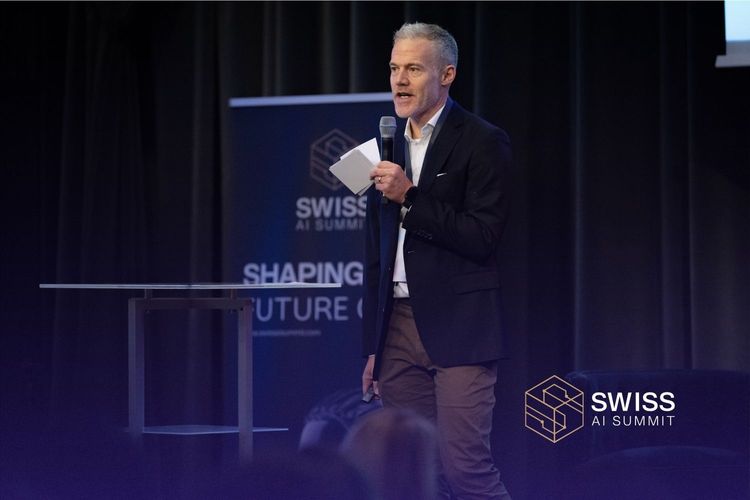
February 9, 2026
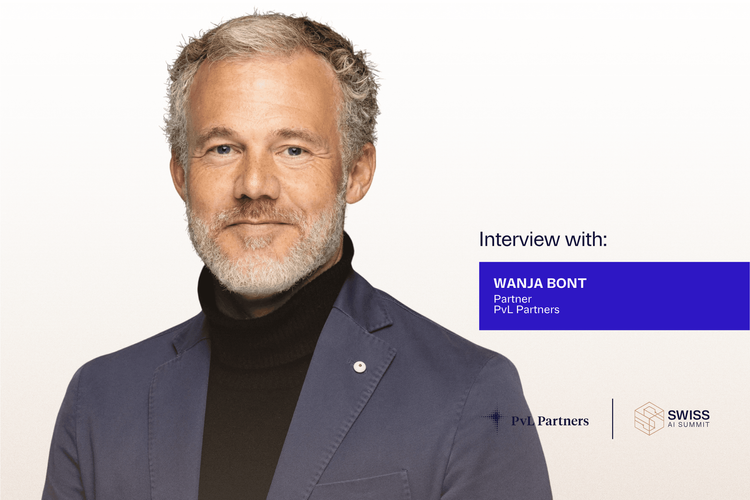
From AI Ambition to Scalable Impact
Swiss AI Summit 2025 Keynote with Wanja Bont, Partner @ PVL Partners
-
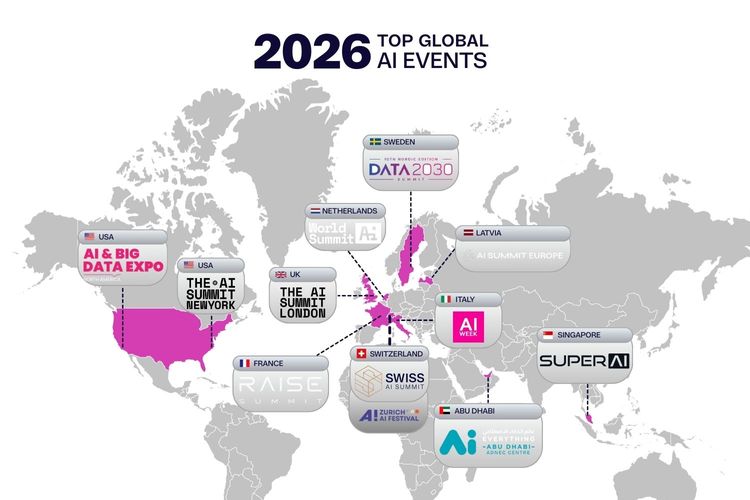
February 6, 2026
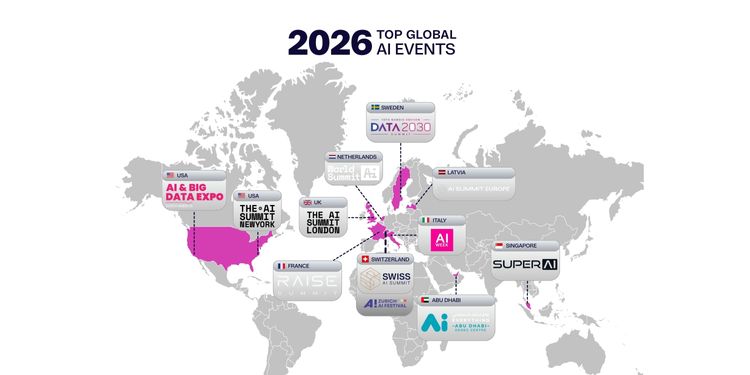
Swiss AI Summit listed as a top Global AI Event
Read more about the Article and our Listing by DigitalMara.
-
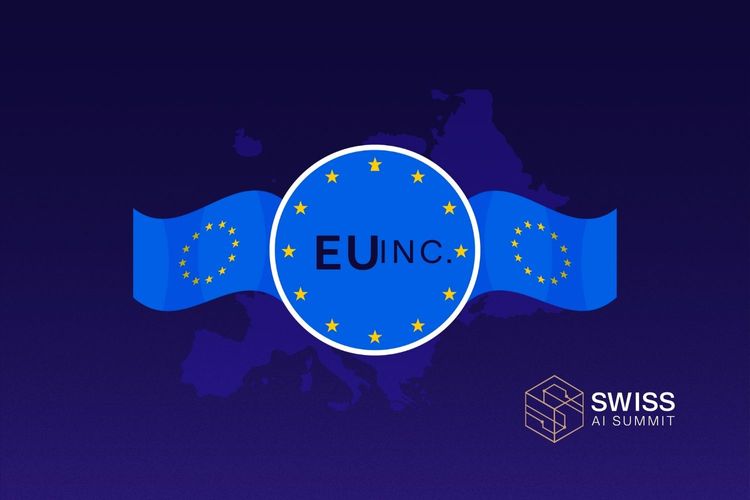
February 5, 2026
EU-INC. One Legal Entity, One AI Rulebook:
What the EU’s Single Market Vision Means for Tech Companies and AI Innovation
-
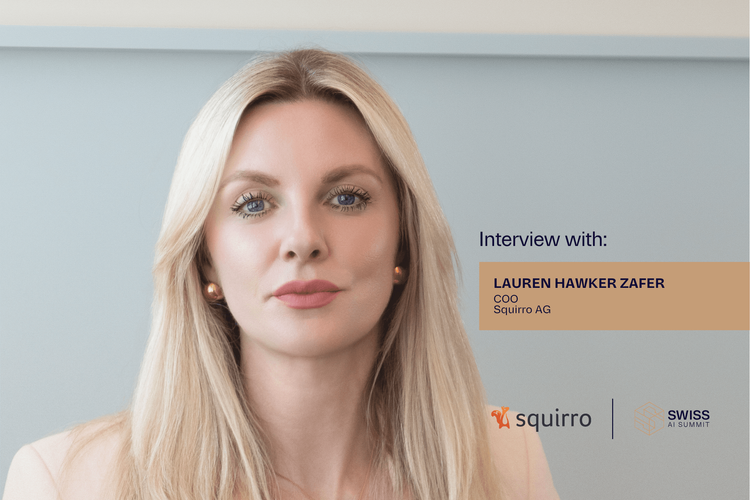
November 2, 2025
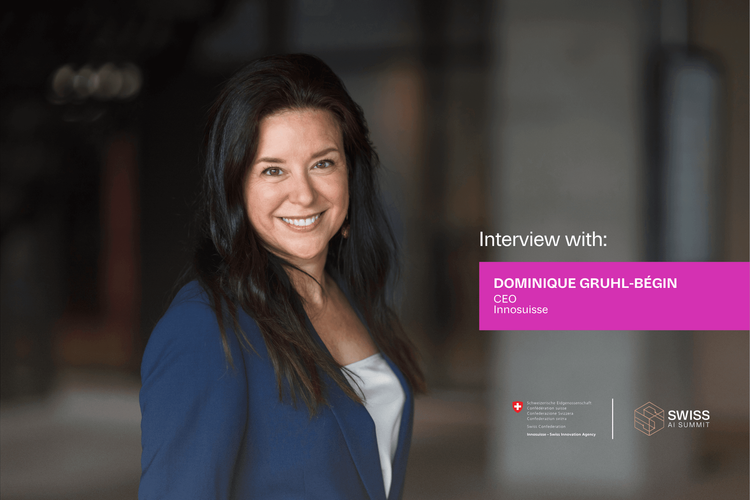
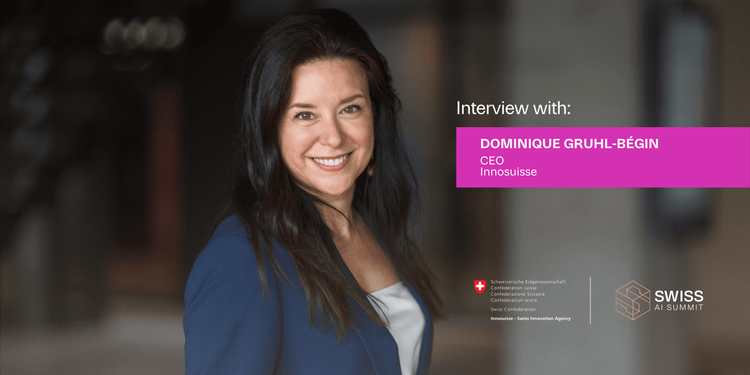
Interview with: Lauren Hawker Zafer
How Squirro’s Lauren Hawker Zafer views Zurich’s growing AI ecosystem
-
October 8, 2025
PRESS RELEASE: SwissCognitive and Swiss AI Summit join forces
Strengthening business-driven AI adoption and dialogue in Switzerland and beyond
-

October 1, 2025
Article: General-Purpose AI Code of Practice
From Voluntary Code to Strategic Standard: leveraging the GPAI Code of Practice.
-
September 29, 2025
News: The Swiss AI Summit Ecosystem
Switzerland's holistic Platform for AI Innovation
-
September 10, 2025
Article: Escaping the 85% Failure Trap:
Boost Your AI with Quantum-Enhanced Time Series Forecasting
-
September 10, 2025
Article: AI as the Brain of Tomorrow’s Financial System
Insights from Pathway 2035 for Financial Innovation – Your Navigator
-
September 8, 2025
Article: Shaping the Future
AI for Good Global Summit 2025 as the UN’s Premier Forum for AI Innovation
-
September 7, 2025
Article: Unlocking Generative AI in Finance
Solving Complex Data Challenges for Central Banks and Government Authorities
-
September 3, 2025
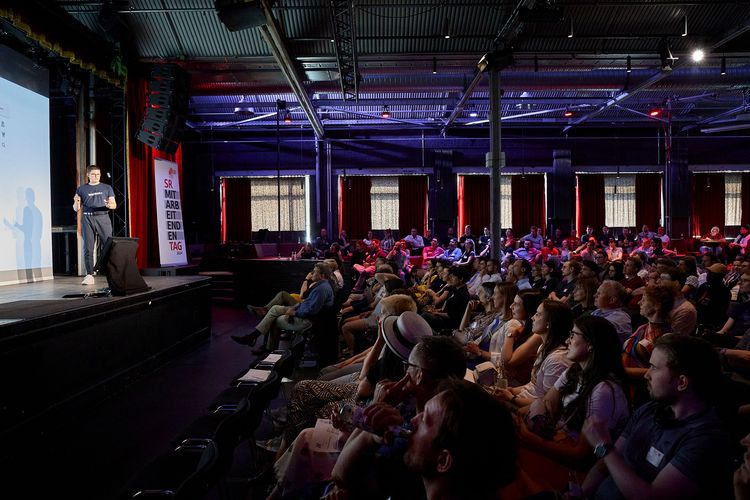
Article: THE FIVE TRUTHS OF AI - 2025 PERSPECTIVE
Let's explore the evolved "5 Truths of AI" that have emerged in 2025.
-
September 2, 2025
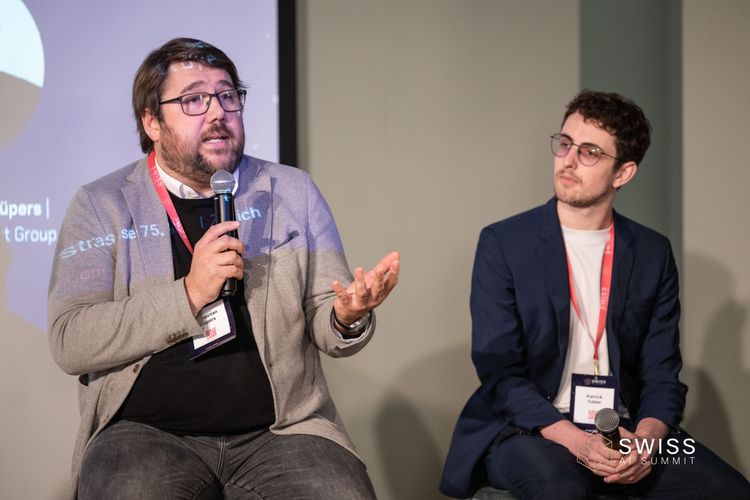
Article: Masumi - The PayPal for AI Agents
“We want to build the PayPal for AI agents.”







Share via: