
Author

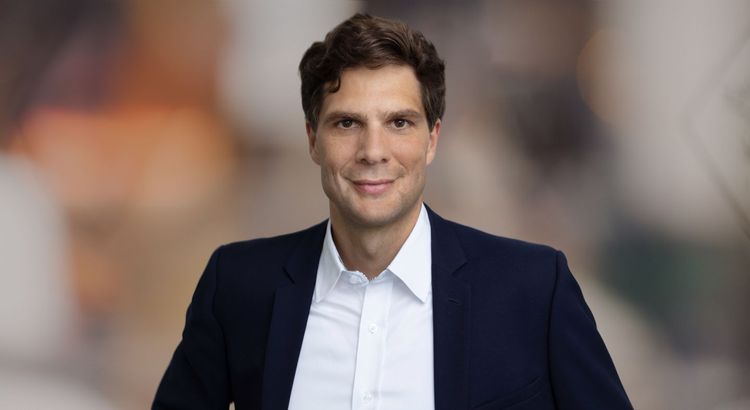
Prof. Dr. Daniel Patrick Politze
Professor & Head INS , INS Institut für Netzwerke und Sicherheit - OST
Published on:
November 12, 2026
Machine Speed
Machine Speed: Why Cyber Defense Is Becoming a Collective Effort
AI is tipping the balance toward attackers as long as defenders act alone. Solid basics and coordinated defense across organizational boundaries can restore that balance.
Machine Speed Is the New Normal
AI helps both sides: attackers with reconnaissance, exploit development, and social engineering; defenders with alert triage, threat hunting, and containment. What matters most is tempo. According to CrowdStrike, average eCrime breakout time in 2025 was 29 minutes, and the fastest case took just 27 seconds.
Sophos documents a campaign in which roughly a dozen AI agents wrote and tested exploit modules and evasion techniques within days. A human team would have needed weeks.
Asymmetry Is Growing
An attacker needs only one gap, while a defender usually has a far larger attack surface to protect. Failed attempts cost the attacker almost nothing, whereas a wrong call by the defender can disrupt operations. The attacker automates without regard for side effects or rules. The defender remains bound by availability requirements, change processes, liability, and regulation.
Defenders do know their own environment and own the telemetry. Even so, an attacker using AI will tend to have the edge over a defender using AI who fights alone.
Basics Buy Time
The basics must be in place: identity security with phishing-resistant MFA, exposure management, segmentation, around-the-clock detection and response, and tested, immutable backups. Their purpose goes beyond preventing attacks; they also buy time. Every hurdle slows lateral movement and creates the window needed to detect and stop an attack before it is too late.
Mutual Trust and Coordination Are the Biggest Lever
Attackers reuse infrastructure, tools, and TTPs, so every detected attack can become a sensor for everyone. Rapid exchange within an industry, a country, or an alliance helps detect attack paths earlier, avoids solving the same problem twice, and lowers overall risk for all. The prerequisite is trust, and it must be built long before a crisis.
Defense then becomes a joint operation. Parallelizing means several organizations take on subtasks at the same time: one assesses exploitability, another develops detection rules, a third tests the workaround. Synchronizing means triggering measures simultaneously, such as blocking attacker infrastructure across an entire sector. Distributing means drawing on specialist expertise where it is strongest and making the results available to all. Machine-readable formats together with AI as a force multiplier, bring this alliance up to machine speed.
CSCs Are a First Step
The sector-specific Cyber Security Centers, advanced by Switzerland's federal cybersecurity office (BACS) together with its partners, are a first step, covering sectors such as finance, healthcare, and energy. However, the potential is far greater. What is needed is machine-readable exchange in near real time, cross-sector links, shared playbooks and exercises, and pooled analysis capacity.
Conclusion
Attackers using AI will remain faster than any single organization. That does not mean they have to be faster than a well-coordinated collective.
Share via:
Read more
-

November 6, 2026
The Platform Comes to You
How We’re Bringing the Full Power of Salesforce to Any Interface
-
November 5, 2026
The Hidden Economics of AI: Choosing the Right Operating Model for Sovereignty and Cost Control
Navigating AI Cost & Sovereignty: Innflow Workshop
-

October 26, 2026
Why Switzerland Is well positioned for the Private AI Era
Interview with Yves Zischek, MD Switzerland & Austria @ Digital Realty
-
October 15, 2026
AI: Threat or Opportunity? What a Translator Learned from Kodak’s Downfall
How Innosuisse R&D helped turn AI disruption into LegalTech growth.
-
October 13, 2026
The Myth of Fast: Why Switzerland's AI Advantage Depends on What It Refuses to Rush
Clouds on Mars’ perspective on AI adoption and what's at stake for Switzerland
-
October 9, 2026
AI in financial services: From experimentation to trust
Turning AI prototypes into trusted, scalable financial solutions.
-
October 7, 2026
Intelligent Resilience: Rethinking Financial Governance in the Era of Digital Fraud and AI
Leverage AI and real-time analytics to meet FINMA’s dynamic fraud guidance.
-
September 7, 2026
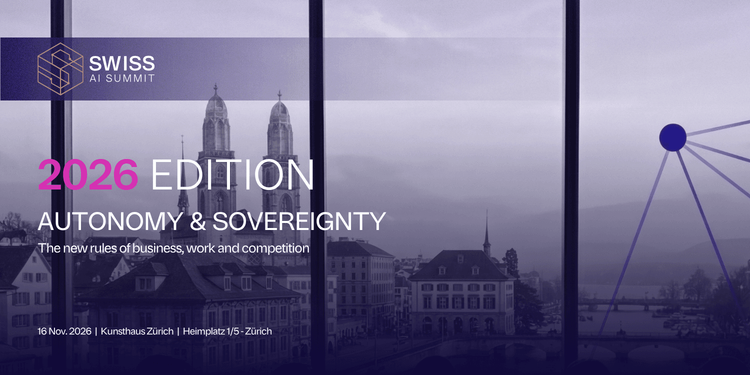
2026 EDITION: Autonomy & Sovereignty
The Swiss AI Summit announces the theme of the 2026 Edition.
-
July 7, 2026
Portugal's State Reform in the Age of AI
What Governments Can Learn from a New Model of Public Administration
-

June 30, 2026
From Code Completion to Autonomous Coding Agents
Our Key Takeaways from our Vibe Coding Session hosted by OST
-
May 14, 2026
The geopolitics of data sovereignty
The political, economic, and strategic battle over digital trust
-

March 25, 2026
Swiss AI Magazine 2026 Launch
A recap of the Swiss AI Magazine 2026 launch event in Zurich at Headsquarter.
-

March 11, 2026
How to create real business value from AI
Insights from the First Swiss AI Summit Community Event of 2026
-
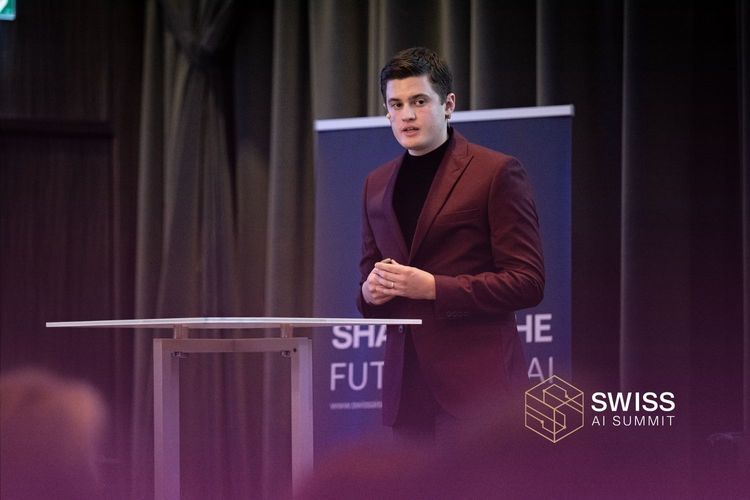
February 13, 2026
Agentic AI Orchestration
Swiss AI Summit 2025 Keynote with Georg M. V. Olowson from IBM.
-
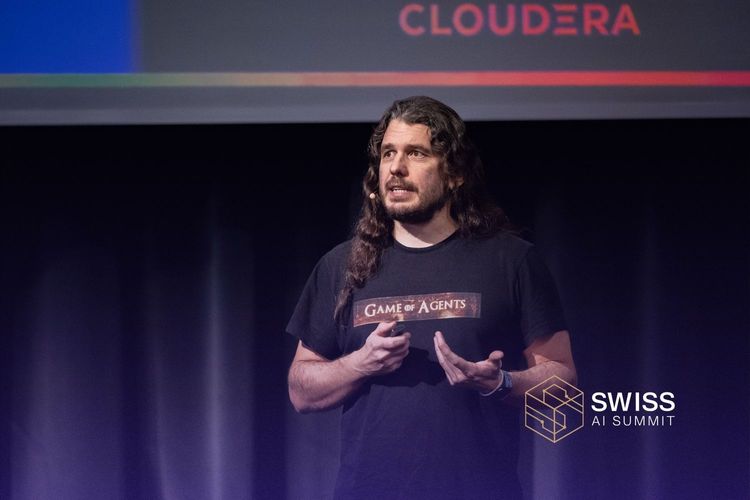
February 12, 2026
Driving Scalable AI Adoption
Swiss AI Summit 2025 Keynote with Sergio Gago, CTO @ Cloudera
-
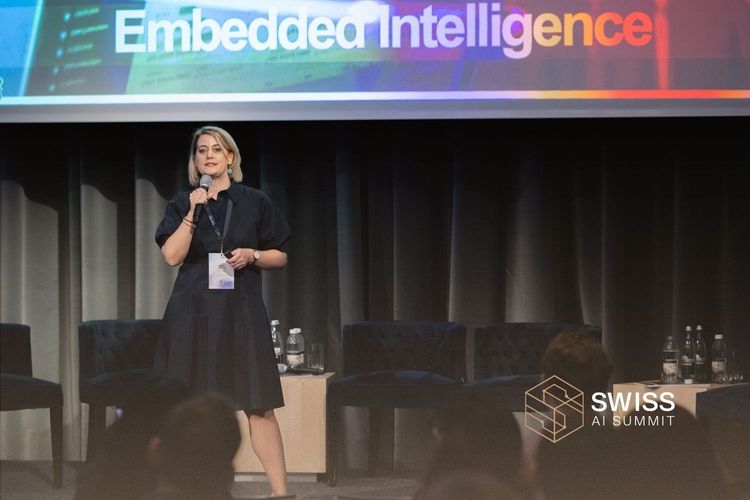
February 11, 2026
Embedded Intelligence
Swiss AI Summit 2025 Keynote with Nadine Ebmeyer, CEO @ BANQR
-
February 10, 2026
Enterprise AI Beyond the Hype
Swiss AI Summit 2025 Keynote with Dr. Dorian Selz, Founder & CEO @ Squirro AG
-
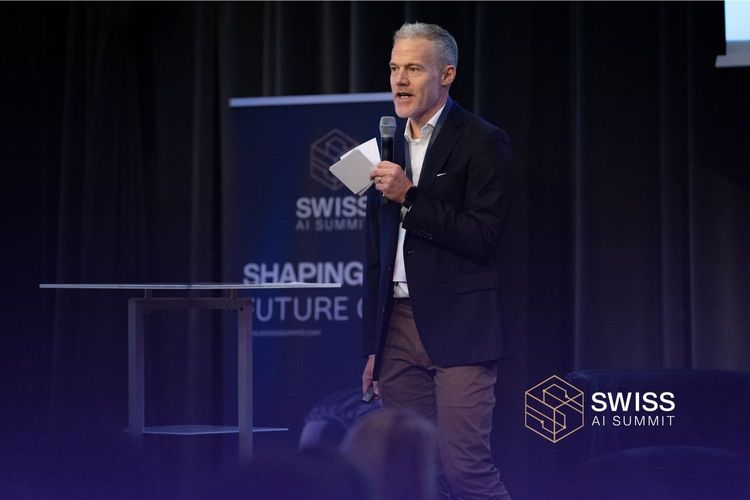
February 9, 2026
From AI Ambition to Scalable Impact
Swiss AI Summit 2025 Keynote with Wanja Bont, Partner @ PVL Partners
-
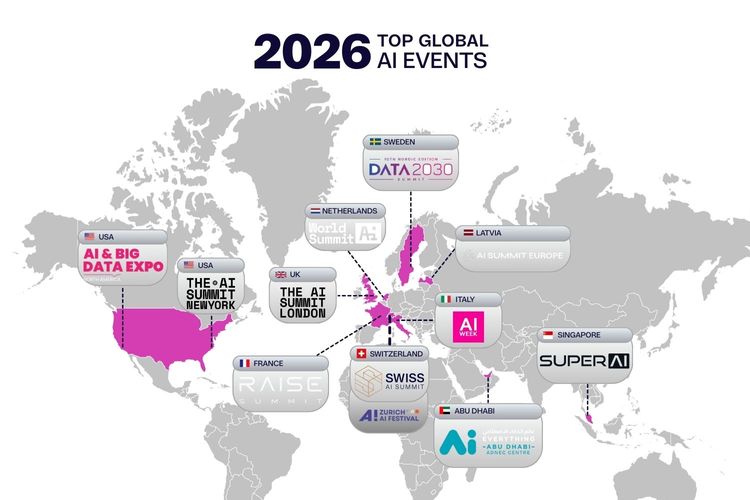
February 6, 2026
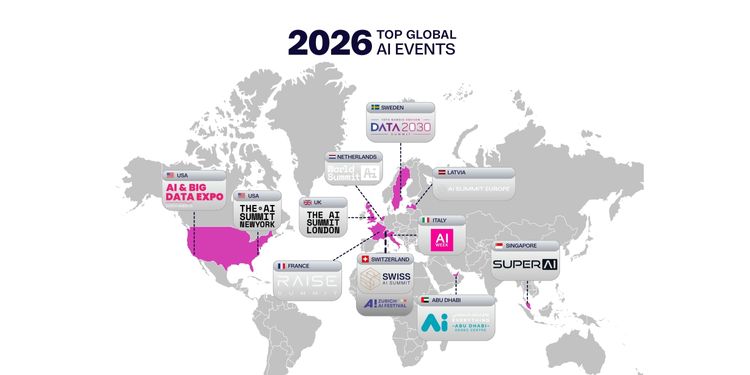
Swiss AI Summit listed as a top Global AI Event
Read more about the Article and our Listing by DigitalMara.
-

February 5, 2026
EU-INC. One Legal Entity, One AI Rulebook:
What the EU’s Single Market Vision Means for Tech Companies and AI Innovation
-
November 2, 2025
Interview with: Lauren Hawker Zafer
How Squirro’s Lauren Hawker Zafer views Zurich’s growing AI ecosystem
-
October 8, 2025
PRESS RELEASE: SwissCognitive and Swiss AI Summit join forces
Strengthening business-driven AI adoption and dialogue in Switzerland and beyond
-

October 1, 2025
Article: General-Purpose AI Code of Practice
From Voluntary Code to Strategic Standard: leveraging the GPAI Code of Practice.
-
September 29, 2025
News: The Swiss AI Summit Ecosystem
Switzerland's holistic Platform for AI Innovation
-

September 10, 2025
Article: Escaping the 85% Failure Trap:
Boost Your AI with Quantum-Enhanced Time Series Forecasting
-
September 10, 2025
Article: AI as the Brain of Tomorrow’s Financial System
Insights from Pathway 2035 for Financial Innovation – Your Navigator
-
September 8, 2025
Article: Shaping the Future
AI for Good Global Summit 2025 as the UN’s Premier Forum for AI Innovation
-
September 7, 2025
Article: Unlocking Generative AI in Finance
Solving Complex Data Challenges for Central Banks and Government Authorities
-
September 3, 2025
Article: THE FIVE TRUTHS OF AI - 2025 PERSPECTIVE
Let's explore the evolved "5 Truths of AI" that have emerged in 2025.
-
September 2, 2025
Article: Masumi - The PayPal for AI Agents
“We want to build the PayPal for AI agents.”













Share via: