

Authors

Gabriel Meier
Counsel, Corporate and M&A / ICT & Digital , MLL Legal AG

Lukas Bühlmann
Partner & Co-Head ICT & Digital , MLL Legal AG
Published on:
September 7, 2025
Reading time:
7 minutes
Article: AI ETHICS FOR ENTREPRENEURS:
Artificial intelligence (AI) is an integral part of modern entrepreneurship. Along with the great opportunities, AI brings legal and ethical challenges that entrepreneurs need to navigate thoughtfully.
Regulators, investors, employees, and customers are all paying closer attention to how AI is deployed. Ethical missteps can result not only in compliance risks, but also in reputational damage. When formulating an AI policy, companies should adhere to the guidelines established by the EU AI Act and data protection law. Here are six key areas every companies should understand when thinking about AI ethics in their business.
1. Responsible Data Use: Ethics Meets Compliance
Most AI systems are only as good as the data they are trained on. For entrepreneurs, this raises two critical questions: where does the data come from, and how is it being used?
Under Swiss data protection law (FADP) and the EU's GDPR, businesses must ensure that personal data used for AI purposes is collected transparently, used proportionally, and stored securely. Consent, anonymisation, and purpose limitation are not just legal terms—they are ethical cornerstones of responsible AI.
Key takeaway: Before deploying AI, assess whether your data sources are compliant, especially if you are using personal or sensitive data. This applies even when using off-the-shelf AI tools from third-party vendors.
2. Fairness and Bias: Avoiding Ethical Blind Spots
AI systems can unintentionally reinforce or amplify biases present in their training data. This can lead to unfair outcomes in hiring, lending, pricing, or even customer support—areas that many mid-sized firms are already automating.
Discrimination, even if unintentional, can trigger legal action and erode trust with customers and employees. More importantly, ethical entrepreneurship means building products and processes that work for all groups of society.
Key takeaway: Regularly audit your AI systems for bias. Ask vendors how their tools are trained and tested for fairness. In high-risk areas (like HR), consider involving external reviewers or ethics advisors.
"Black box"
3. Transparency and Explainability: Building Trust
"Black box" AI—systems that make decisions without explaining how—pose a serious challenge to transparency. Yet customers, employees, and regulators increasingly expect AI decisions to be explainable and traceable.
In sectors like finance, healthcare, and insurance, explainability will become a legal requirement under forthcoming EU AI rules. Even where not legally required, a lack of transparency can hinder user adoption and create friction in internal processes.
Key takeaway: Opt for AI systems that allow some level of explanation and auditability. Make sure employees understand how decisions are made, especially in customer-facing or sensitive applications.

4. Accountability and Governance: Who’s in Charge?
When AI causes harm — say, an incorrect automated decision or a privacy breach — who is accountable? In Switzerland, the legal responsibility typically rests with the company deploying the AI, not the software vendor.
This means setting clear lines of responsibility internally. Who approves the use of AI? Who reviews the outputs? Are ethics or compliance teams involved early enough in the process?
Key takeaway: Treat AI governance as part of your core risk management. Consider appointing a responsible person (e.g., a CTO, CDO, or legal counsel) to oversee AI ethics and align your company’s use of AI with its values and legal obligations. Implement a clear AI Policy for the use of AI.
5. Human Oversight: Drawing the Right Boundaries
Even the best AI systems make mistakes. Ethical entrepreneurs know where to keep a human in the loop — especially when decisions significantly impact individuals or involve value judgments.
Automation should augment human decision-making, not replace it entirely. For instance, AI can help shortlist job applicants, but a human should still review and interview. In customer service, AI chatbots can triage queries, but escalation to a person should remain possible.
Key takeaway: Identify where human oversight is critical in your workflows. Build in review mechanisms, especially in sensitive or high-impact use cases.
6. Copyright Compliance: Navigating Intellectual Property Rights
AI models are trained on large datasets, some of which may include copyrighted materials. Understanding how copyright law applies to AI-generated outputs and training datasets is crucial.
With rapidly evolving case law and regulatory guidance, companies must stay informed about copyright developments. Entrepreneurs should carefully evaluate how providers of underlying AI models handle copyright compliance, including whether they have obtained necessary licenses or are involved in legal disputes.
Key takeaway: Regularly monitor developments in copyright law related to AI. Verify how AI vendors or model deployers address copyright issues in their datasets and generated content to mitigate legal risks and maintain ethical standards
Ethics as a Business Advantage
Ethical AI is not just about compliance — it is about competitiveness. Swiss businesses that lead with transparency, fairness, and accountability are more likely to earn customer trust, attract top talent, and avoid regulatory setbacks.
To effectively address these ethical challenges, the European Union's AI Act provides a valuable roadmap. Although designed specifically for the EU market, its principles offer universally applicable insights that will benefit any startup or SME looking to develop responsible AI solutions.
Conclusion
Ethics as a strategic advantage As AI becomes an increasingly integral part of the business landscape, companies should view ethics not as a barrier, but as a strategic advantage. Using the EU AI Act and data protection law, companies can confidently navigate complex ethical landscapes and implement an AI policy that is guiding all the employees to act in the interest of the company and society. Those companies that prioritise ethical AI development will not only avoid pitfalls, but also seize greater opportunities, positioning themselves as leaders in the responsible use of powerful, transformative technologies.
Share via:
Read more
-

March 25, 2026
Swiss AI Magazine 2026 Launch
A recap of the Swiss AI Magazine 2026 launch event in Zurich at Headsquarter.
-

March 11, 2026
How to create real business value from AI
Insights from the First Swiss AI Summit Community Event of 2026
-

February 13, 2026
Agentic AI Orchestration
Swiss AI Summit 2025 Keynote with Georg M. V. Olowson from IBM.
-

February 12, 2026
Driving Scalable AI Adoption
Swiss AI Summit 2025 Keynote with Sergio Gago, CTO @ Cloudera
-

February 11, 2026
Embedded Intelligence
Swiss AI Summit 2025 Keynote with Nadine Ebmeyer, CEO @ BANQR
-

February 10, 2026
Enterprise AI Beyond the Hype
Swiss AI Summit 2025 Keynote with Dr. Dorian Selz, Founder & CEO @ Squirro AG
-

February 9, 2026
From AI Ambition to Scalable Impact
Swiss AI Summit 2025 Keynote with Wanja Bont, Partner @ PVL Partners
-
February 6, 2026
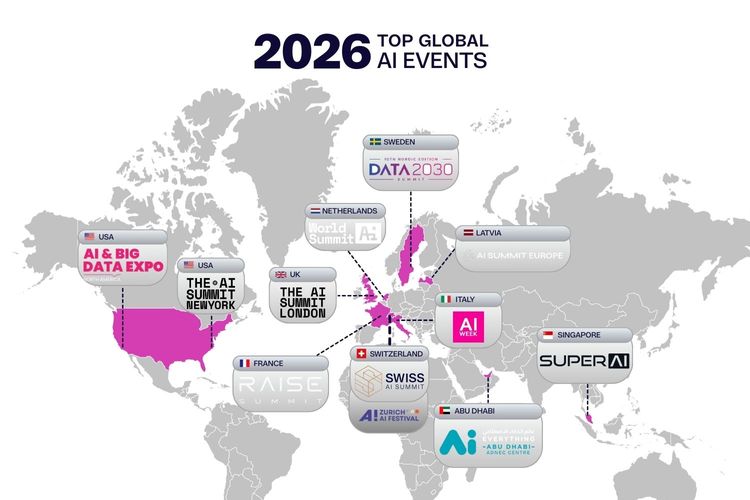
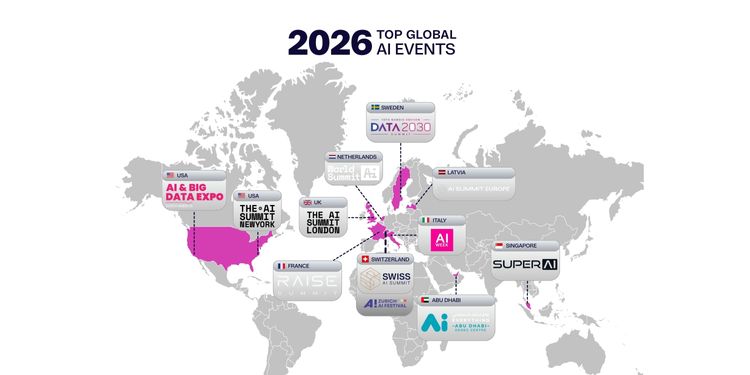
Swiss AI Summit listed as a top Global AI Event
Read more about the Article and our Listing by DigitalMara.
-

February 5, 2026
EU-INC. One Legal Entity, One AI Rulebook:
What the EU’s Single Market Vision Means for Tech Companies and AI Innovation
-
November 2, 2025
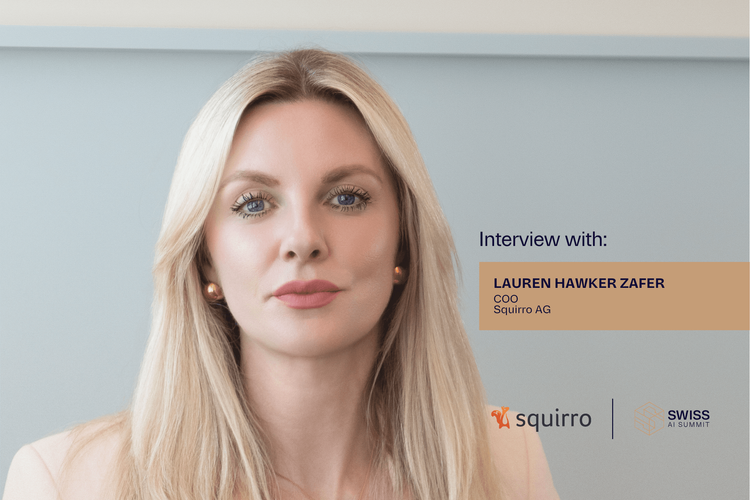
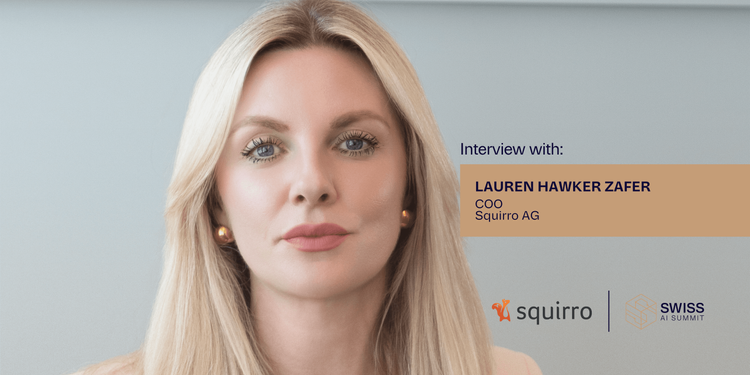
Interview with: Lauren Hawker Zafer
How Squirro’s Lauren Hawker Zafer views Zurich’s growing AI ecosystem
-

October 8, 2025
PRESS RELEASE: SwissCognitive and Swiss AI Summit join forces
Strengthening business-driven AI adoption and dialogue in Switzerland and beyond
-

October 1, 2025
Article: General-Purpose AI Code of Practice
From Voluntary Code to Strategic Standard: leveraging the GPAI Code of Practice.
-
September 29, 2025
News: The Swiss AI Summit Ecosystem
Switzerland's holistic Platform for AI Innovation
-

September 10, 2025
Article: Escaping the 85% Failure Trap:
Boost Your AI with Quantum-Enhanced Time Series Forecasting
-

September 10, 2025
Article: AI as the Brain of Tomorrow’s Financial System
Insights from Pathway 2035 for Financial Innovation – Your Navigator
-

September 8, 2025
Article: Shaping the Future
AI for Good Global Summit 2025 as the UN’s Premier Forum for AI Innovation
-

September 7, 2025
Article: Unlocking Generative AI in Finance
Solving Complex Data Challenges for Central Banks and Government Authorities
-

September 3, 2025
Article: THE FIVE TRUTHS OF AI - 2025 PERSPECTIVE
Let's explore the evolved "5 Truths of AI" that have emerged in 2025.
-

September 2, 2025
Article: Masumi - The PayPal for AI Agents
“We want to build the PayPal for AI agents.”




























Share via: